
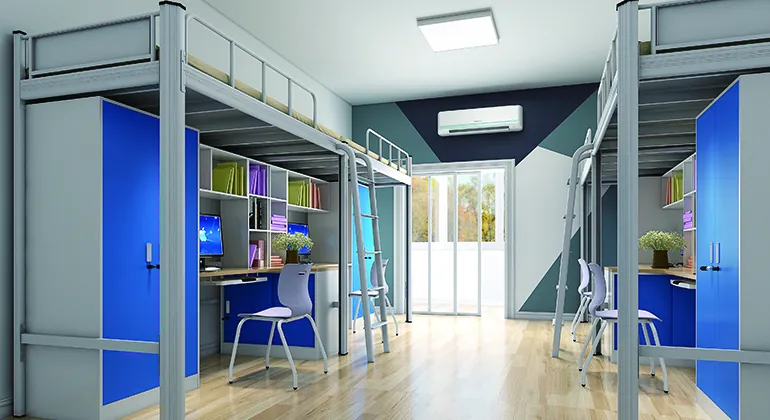
Modern residence halls have evolved into hybrid hubs essential for rest, rigorous study, and complex social interaction. However, facility managers face significant pain points: limited square footage, strict budget constraints, and the rapid wear and tear inherent to high-traffic environments.Furthermore, tight turnover windows demand swift maintenance. To navigate these challenges, optimizing the dorm room layout and selecting durable dorm furniture are critical strategies for ensuring operational efficiency and student retention.
How to Strategically Plan Dorm Room Layouts
1. Optimizing Multi-Occupancy Dorm Room Layouts
Strategic space planning starts with selecting the right dormitory room layout model for the building type, occupancy density, and institutional goals. In multi-occupancy settings, furniture must work as a flexible system, not as isolated pieces.
- The parallel layout remains common in traditional double or triple rooms, placing beds and desks along opposing walls. While efficient and easy to standardize, its success depends on compact desks, integrated storage, and under-bed solutions that prevent floor congestion.
- The loft or integrated layout maximizes vertical space, a critical advantage in small footprints. Elevated bed systems free up floor area for desks, wardrobes, or lounge seating underneath, transforming a tight room into a functional living and learning zone. Integrated bed-desk-storage systems also reduce the total furniture count, shortening installation and maintenance cycles.
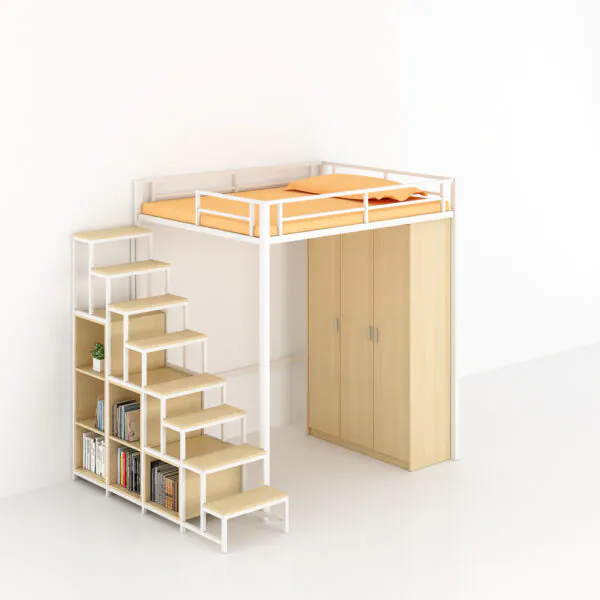
- Suite-style configurations address growing demand for privacy and community. Individual or semi-private bedrooms arranged around a shared living area balance personal space with social engagement. For new-build or renovation projects, this dormitory room layout allows standardized private rooms supported by modular common–area furniture, improving long-term adaptability.
2. Inclusivity and ADA Compliance
Space planning must also meet accessibility and inclusivity requirements. In the United States, ADA guidelines dictate minimum clearances such as 36‑inch circulation paths and 60‑inch turning radii. Storage access heights typically fall between 15 and 48 inches from the floor.
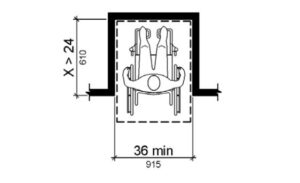
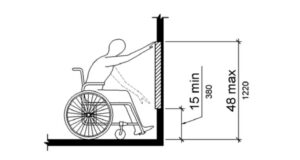
Picture from https://www.ada.gov/assets/pdfs/2010-design-standards.pdf
These requirements influence bed heights, wardrobe designs, desk reach zones, and pathway widths. When designed correctly, accessible layouts enhance usability for all residents while reducing legal and operational risk for facility operators.
How to Choose the Right Dorm Furniture: Durability, Modularity & ROI
1. The Value of Modular Systems
From a procurement perspective, the total cost of ownership (TCO) matters more than the initial purchase price. Modular systems—such as stackable chests, reversible desks, and reconfigurable bed frames—offer significant operational advantages.
They simplify room refreshes, allow rapid reconfiguration between academic years, and support multiple dorm room floor plan variations using the same core components. This flexibility minimizes inventory complexity and storage requirements while extending furniture life cycles.
2. Material Standards and Safety Compliance
Contract furniture for dormitories must withstand continuous high‑impact use. We recommend specifying bed systems with heavy‑gauge steel frames and reinforced joinery that have been rigorously tested for load capacity. Features like commercial‑grade drawer slides and high-pressure laminate surfaces significantly reduce your recurring maintenance tickets (work orders).
Furthermore, strict compliance with safety standards helps minimize operational risks, though the specific requirements vary across countries and application scenarios.
For example, high-risk public spaces may require furniture to meet CAL 133, which involves full-scale fire testing and the use of fire-retardant barriers. In the United States, clothing storage units (CSUs) must also comply with the STURDY Act, which mandates stability testing that simulates interaction with a 60-lb child.
How to Enhance the Dorm Environment: Lighting & Acoustics
A student’s ability to focus and rest is directly tied to environmental factors. Furniture and layout choices play a pivotal role in controlling these elements.
1. Lighting Solutions
Poor lighting causes eye strain and fatigue. A professional lighting plan prioritizes visual comfort.
- Illuminance: Study areas should achieve at least 500 luxand 300-500 lux is generally ideal for reading.
- Quality: Select LED fixtures with a high color rendering index (CRI ≥90) for clarity. Ensure fixtures are flicker-free and exempt from blue light hazards (RG0 rating) to protect vision.
- Color Temperature: Use 4000K (cool white) for study zones to enhance concentration and 2700K (warm white) for sleeping areas to promote relaxation.
2. Acoustic Control
Noise is a primary complaint in high-density living. Acoustic strategies involve absorbing and blocking.
- Absorption: Incorporate soft materials like upholstered furniture, heavy drapes, and acoustic wall treatments to dampen reverberation.
- Blocking: Ensure walls and partitions achieve a sound transmission class (STC) of at least 50 to isolate bedrooms from corridor noise.
3. Psychology of Color
Color influences mood and cognitive performance.
- Focus: Soft blues and greens can improve concentration and reduce anxiety.
- Balance: Neutral tones like warm grey or off-white provide a flexible backdrop.
- Energy: Warm accents (yellowor orange) should be used sparingly to stimulate creativity without causing overstimulation.
Topohut Helps You Transform Student Living
As a certified five-star supplier with over 30 years of manufacturing excellence, Topohut stands as your premier one-stop solution for optimizing dorm room layouts and providing high-quality dorm furniture.
Trusted by over 51,520 clients worldwide—including prestigious institutions like The University of Queensland and Sun Yat-sen University—we deliver hassle-free project execution from free customizable 3D designs to final delivery.
Our 79,100-square-meter facility ensures quality meeting international standards, including ISO, CE, SGS, and TUV, across our entire range, from durable bunk beds and study desks to modular common area seating.
With a global reach spanning 68 countries and flexible logistics options such as EXW, FOB, CIF, and DDP, Topohut is your reliable partner to maximize ROI and build enduring, safe educational environments.
Relevant information: