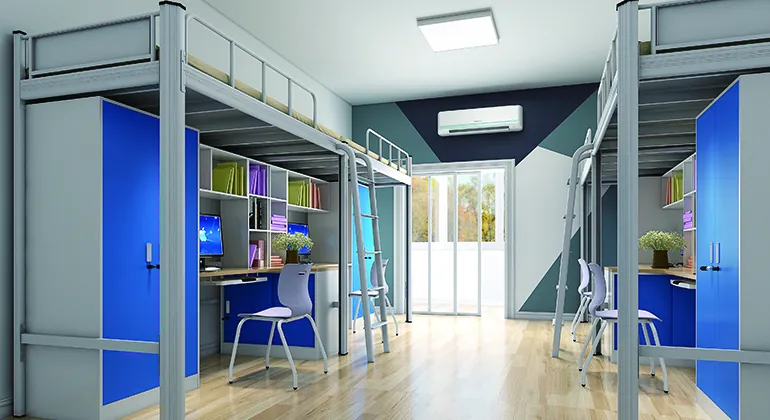
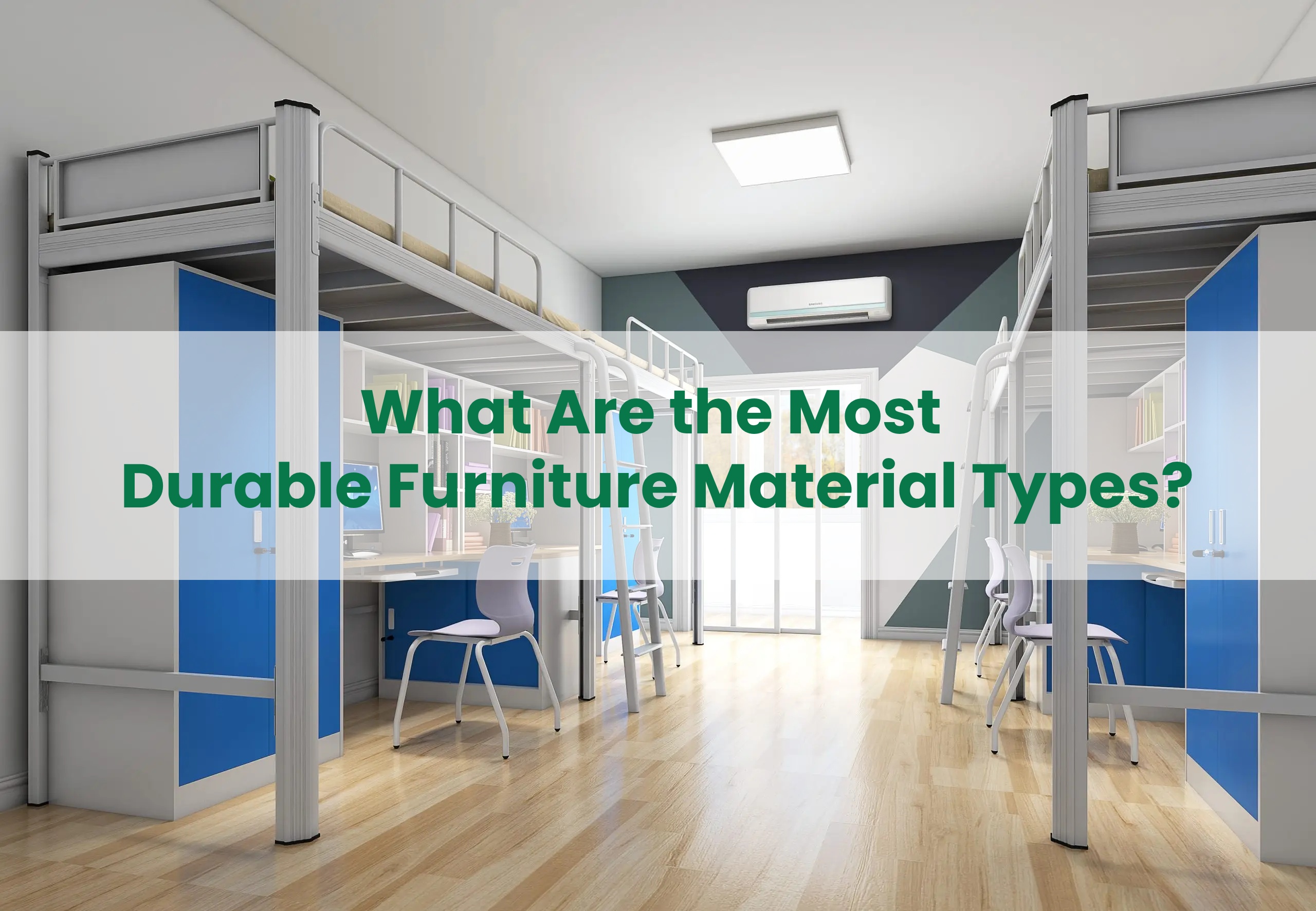
In high-traffic environments like dormitories and hostels, the choice of furniture material types significantly dictates operational costs and safety. Compact living spaces demand pieces that withstand constant turnover without sacrificing aesthetics.In this guide, Topohut explores the most durable options that balance long-term practicality with budget-friendly acquisition for property developers and accommodation providers looking for high-performance solutions.
Durable Furniture Material Types for High-Traffic Living
Selecting the right durable furniture material is the first step in ensuring a high return on investment. For institutional settings, the standard for “durability” is much higher than in traditional residential homes.
1. Solid Wood
Solid wood remains the gold standard for premium feel and extreme longevity. In student housing or corporate dormitories, hardwoods like oak and maple are preferred. Their dense structure makes them remarkably resistant to the heavy wear and tear of daily student life.
A major advantage of solid wood is its repairability; surface scratches or stains can be sanded and refinished, effectively resetting the life of furniture to its original state.
Best for: Heavy-duty bed frames, primary desk structures, and high-end dormitory cabinetry.
2. Metal
Metal furniture, particularly steel, is a dominant force in the hostel and apartment sector. It offers a cost-effective alternative to wood while providing superior structural integrity.
Stainless steel is highly valued for its high tensile strength and incredible resistance to corrosion, making it ideal for shared kitchens or laundry areas. For sleeping quarters, powder-coated steel is a popular choice. It is more affordable than stainless steel and provides a wide range of colors and textures that protect the metal from rust.
Crucially, metal is fireproof and resistant to pests like bedbugs, which is a major concern in high-density housing.
Best for: Bunk bed frames, student lockers, security storage units, and chair support legs.
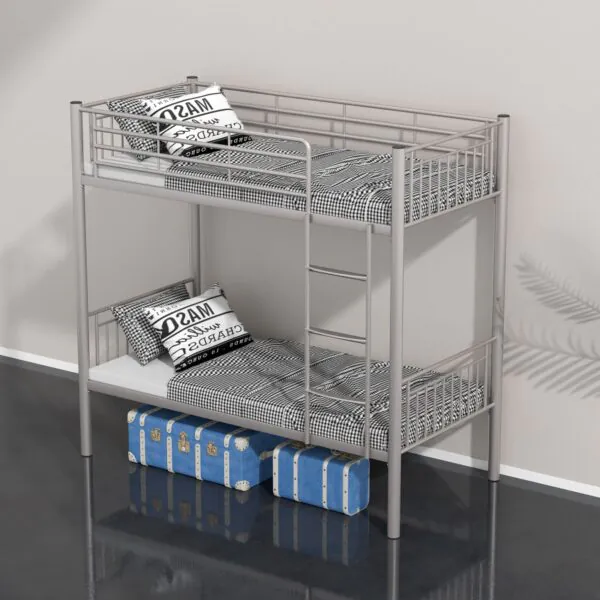
Picture shown: School Dormitory Interlock Stackable Metal Bunk Bed
3. Engineered Wood and Laminates
Modern technology has made engineered wood a staple in the dormitory industry.
- High-Pressure Laminate (HPL): This material features extreme surface hardness. It is highly resistant to scratches, impact, and heat, making it the perfect choice for study desks and tabletops where students work and eat.
- Plywood: Unlike MDF, plywood utilizes a cross-laminated structure. This makes it significantly stronger, more impact-resistant, and better at handling moisture. It is the ideal substrate for structural components in wardrobes and bed frames.
- Melamine/MFC: For wardrobes and shelving, melamine-faced chipboard (MFC) offers a high price-performance ratio. While the decorative layer is thinner than HPL, it provides a clean, easy-to-sanitize surface that is more than sufficient for vertical storage.
Best for: Desktop surfaces, wardrobe doors, and structural cabinet carcasses.
4. Plastic
High-quality recycled plastics, specifically high-density polyethylene (HDPE), have a long lifespan of 20 to 50 years. These materials do not rot, crack, or rust, and they require virtually zero maintenance.
For outdoor common areas in apartment complexes or specialized medical-dormitory environments that require frequent, aggressive disinfection, HDPE is an unrivaled choice.
Best for: Cafeteria chairs, stackable stools, and outdoor patio sets.
5. Upholstery and Fabrics
For lounge areas, the durability of fabrics is measured by “rub tests.” In commercial or institutional settings, providers should look for fabrics with a Martindale rating of around 30,000 cycles or a Wyzenbeek rating of 30,000 double rubs.
Synthetic fibers such as polyester and microfibers are the industry standard because they are wrinkle-resistant, fade-resistant, and offer superior stain protection when treated with stain-repellent finishes. Additionally, all fabrics in these environments must be fire-retardant to comply with strict institutional safety codes.
Best for: Common area sofas, lounge armchairs, and acoustic privacy pods.
Expert Tips on Choosing the Right Durable Furniture Material Type
Selecting the right material isn’t just about picking the hardest substance; it’s about matching the material to the environment.
1. Start With Intended Use
Assess the “traffic level” of the room.
- High Traffic (like common areas/hostel lobbies): Prioritize metal and heavy-duty plastics. These areas often experiencesituations such as constant movement, heavy bags, spilled drinks.
- Medium Traffic (like dorm rooms): HPL surfaces and solid wood or plywood cores work best here. They offer a “homier” feel but can still handle textbooks, laptops, and late-night snacks.
- Mobility Needs: If furniture needs to be reconfigured frequently (e.g., modular hostel beds), avoid heavy solid wood and opt for lighter, tubular metal frames.
2. Check the “Joints” and Construction
The strength of furniture is also found in its connections. A solid wood chair will still fail if the glue dries out.
- Wood: For wooden frames, mortise and tenon joints are the strongest mechanical connections available, especially when reinforced with pins.
- Metal: In metal furniture, fully welded frames are far superior to those held together by screws, which can loosen over time under constant movement.
- The “Shake Test”: Good contract furniture should feel rigid. If it wiggles when new, it won’t last the semester.
3. Maintenance vs. Aesthetics
There is often a trade-off between how a piece looks and how easy it is to clean.
- Low Maintenance: Metal and plastic are easy to sanitize with standard cleaners—crucial for hostels with high turnover.
- Aesthetics: Wood adds warmth and reduces the “institutional” feel, which is vital for student retention in apartments.
- The Balance: A common hybrid solution is a metal frame with wood accents. This gives you the structural durability of steel with the aesthetic appeal of wood.
Topohut: Expertise in Durable Dorm, Apartment, and Hostel Furniture
With 30+ years of experience, Topohut masters durable furniture material types and robust furniture designs. Today, we have served over 51,520 clients, including prestigious institutions like Sun Yat-sen University and the University of Queensland.
Why partner with Topohut?
- Structure-First Design: We utilize heavy-gauge steel and reinforced joinery (like our signature interlock systems) to ensure our beds and desks remain stable after years of use.
- Material Mastery: We usea curated selection of high-pressure laminates, powder-coated metals, and contract-grade fabrics specifically tested for institutional environments.
- One-Stop Campus Solutions: From a79,100 m2 factory, we provide full-scale OEM/ODM services and free custom design services to ensure a perfect fit for every project.
- Global Logistics Mastery: With 20 years of export experience to 68+ countries, we manage over 500 containers annually, offering flexible shipping from EXW to DDP.
- Certified Reliability: Our commitment to quality is backed by SGS, TUV, BV, and ISO certifications, providing a hassle-free procurement experience from design to final delivery.
Whether you are looking for modular bunk beds that maximize hostel space or scratch-resistant study desks for a new apartment complex, we provide solutions that balance initial affordability with a long furniture life cycle!
Conclusion
Choosing the right furniture material types is key to creating durable, functional, and visually appealing dorms, hostels, and apartments. Topohut combines material expertise with robust designs to deliver long-lasting solutions tailored for high-traffic environments.
Explore our range of highly durable furniture, and let our experts help you optimize every space—reach out to Topohut today to discuss your project needs!