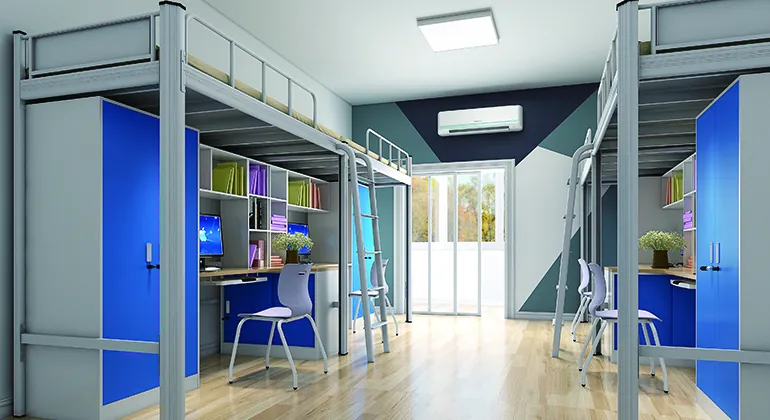
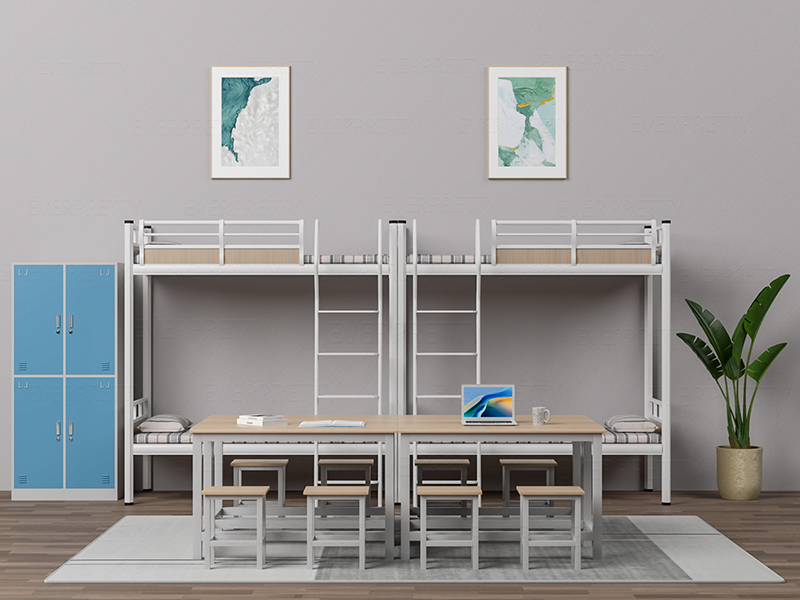
Price is the primary procurement driver for most school and dormitory furniture projects in sub-Saharan Africa. Government education budgets are under pressure. Private school developers work with constrained returns in markets with limited student purchasing power. NGO and mission-funded school projects operate on fixed grants. And across the board, procurement teams need to stretch every dollar to maximize the number of students served.
This guide is written for African buyers who need the most transparent possible picture of what dormitory furniture from China actually costs at different price points — and what you realistically get at each level. No inflated claims, no misleading minimum prices. Just an honest breakdown.
Table of Contents
ToggleThe Three Price Tiers: What They Mean in Practice
Tier 1 — Budget (USD $200–$350 per room)
Budget-tier furniture is designed for maximum cost efficiency in high-volume applications: government boarding school dormitories, mission school hostels, worker accommodation camps, and emergency housing. It uses the minimum specification that maintains reasonable safety and function.
| Item | Budget Spec | Expected Service Life (Africa) |
| Steel bunk bed | 38×38mm steel tube, 1.2mm wall, 40μm powder coat | 5–7 years standard use; 3–5 years in tropical coastal areas |
| Foam mattress | 25kg/m³ density, 10cm, no cover | 3–5 years |
| Study desk | 15mm MFC, 1mm PVC edge banding | 4–6 years (edge banding may peel in humid environments) |
| Chair | Basic tubular steel, polypropylene seat | 5–8 years |
| Wardrobe | 15mm MFC, 2-door, basic hinge | 4–6 years |
| TOTAL ROOM SET | USD $200–$350 landed (varies by country) | Average 4–6 years service life |
Budget-tier furniture is appropriate for projects where: the priority is maximizing beds per dollar, the institutional budget cannot support higher specification, or the project is temporary/emergency in nature.
Honest caveat: budget-tier furniture requires closer maintenance attention, has higher replacement frequency, and in tropical coastal environments (Lagos, Mombasa, Accra) the service life estimates above represent optimistic cases. Budget specification for a coastal West African dormitory will underperform compared to the same spec in a drier climate.
Tier 2 — Mid-Range (USD $350–$600 per room)
Mid-range furniture provides the best total cost of ownership for most African institutional dormitory projects. The specification improvements over budget tier are targeted at the components that fail most often in African environments — edge banding, powder coat, and mattress density — producing significantly longer service life at a modest unit cost increase.
| Item | Mid-Range Spec | Expected Service Life (Africa) |
| Steel bunk bed | 40×40mm steel tube, 1.5mm wall, 60–80μm powder coat | 8–12 years |
| Foam mattress | 30kg/m³ density, 15cm, waterproof cover | 6–8 years |
| Study desk | 18mm MFC, 2mm ABS edge banding | 7–10 years |
| Ergonomic mesh chair | Steel frame, mesh back, adjustable height | 6–9 years |
| Wardrobe | 18mm MFC, 2mm ABS, soft-close hinges | 8–12 years |
| TOTAL ROOM SET | USD $350–$600 landed (varies by country) | Average 8–10 years service life |
Mid-range specification is appropriate for: private school dormitories, university student residences, quality-focused government boarding schools, and any project where the 10-year total cost of ownership matters more than the upfront unit price.
Tier 3 — Premium (USD $600–$1,000+ per room)
Premium-tier furniture is specified for private university residences, international school boarding programs, co-living developments, and staff accommodation projects where student/resident experience is a competitive differentiator. At this tier, the specification includes solid wood or high-quality engineered wood construction, branded finishes, ergonomic office-grade seating, and hospitality-influenced aesthetics.
For most African school dormitory projects, premium specification represents over-investment. It is appropriate where: the institution charges market-rate fees and competes on residential quality, the project is a flagship or flagship-adjacent facility, or the donor/investor has specific quality requirements.
What Drives Price: The 5 Key Specification Variables
Understanding which specification choices drive price allows you to make targeted trade-offs — upgrading the variables that matter most for your climate and use case while staying at budget spec elsewhere.
| Variable | Budget Choice | Mid-Range Choice | Cost Impact of Upgrade | Recommendation for Africa |
| Steel tube size | 38×38mm, 1.2mm | 40×40mm, 1.5mm | + USD $8–$15 per bed | Always upgrade — structural safety and durability |
| Powder coat | 40μm | 60–80μm | + USD $5–$10 per bed | Always upgrade for coastal/tropical locations |
| MFC thickness | 15mm | 18mm | + USD $6–$12 per wardrobe | Upgrade for wardrobes; desk is lower priority |
| Edge banding | 1mm PVC | 2mm ABS | + USD $3–$6 per panel piece | Always upgrade — most common failure point in tropics |
| Mattress density | 25kg/m³ | 30–35kg/m³ | + USD $10–$20 per mattress | Upgrade if budget allows — most used item in the room |
The total cost of upgrading all five variables from budget to mid-range is typically USD $40–$80 per room. On a 200-room project, this represents an additional investment of USD $8,000–$16,000 in exchange for an estimated 4–6 additional years of service life — a strong ROI for most institutional projects.
Getting to the Lowest Possible Price: Volume and Timing
For African buyers working within tight budgets, these strategies produce the most significant additional cost reductions:
- Order volume matters most: the factory price differential between a 50-room and a 300-room order for the same product is typically 15–22%. Combining multiple school buildings or multiple phases into a single order is the single highest-impact cost reduction strategy.
- Standardize across your project: every variation in product specification (different bed sizes, different wardrobe configurations, different colours) adds cost because it requires separate production runs. Standardizing on one room type across your entire project minimizes setup costs and reduces unit price.
- Order off-peak: Chinese furniture factories are busiest January–May and October–November. Orders placed June–September or in November–December often receive more competitive pricing and shorter lead times due to lower capacity utilization.
- Accept standard catalogue colour: custom colours add 8–12% to the unit price. White, light grey, and light beige are standard colours available without premium — and are the most practical choices for institutional dormitories anyway.
- Use steel beds rather than wood: for African climate and budget optimization, steel beds are 15–25% cheaper than equivalent MFC alternatives and significantly more durable in tropical humidity. For beds specifically, steel is the right budget specification for Africa in almost every case.
Sample Price Comparison: 200-Room Boarding School Project
| Configuration | Unit Cost (FOB) | Total FOB (200 rooms) | Est. Landed Cost Nigeria | Est. Landed Cost Kenya |
| Budget spec (Tier 1) | USD $220 | USD $44,000 | USD $80,000–$95,000 | USD $68,000–$78,000 |
| Mid-range spec (Tier 2) | USD $380 | USD $76,000 | USD $135,000–$160,000 | USD $116,000–$135,000 |
| Mid-range + upgrades | USD $430 | USD $86,000 | USD $152,000–$180,000 | USD $131,000–$152,000 |
Landed cost estimates include sea freight, insurance, estimated import duty, and clearing charges. Nigeria landed cost is higher due to import duty (20–35% on furniture categories) and higher clearing charges. Kenya landed cost reflects EAC duty rates (10–25%). Actual costs depend on specific product HS codes and current duty rates — verify with your clearing agent.
| Get an Honest Quote for Your African Project Topohut dormitory furniture provides transparent, itemized quotations for African school and dormitory projects at all price tiers. Share your room count, room type, destination country, and budget range — we will provide an honest assessment of what is achievable within your budget and the trade-offs involved. We have supplied boarding schools, university dormitories, and student hostels across Nigeria, Ghana, Kenya, South Africa, Tanzania, and Ethiopia. Our team understands African procurement constraints and will not quote products that do not suit your environment. Contact us at topohut.com/contact-us. |
Frequently Asked Questions
What is the absolute minimum I should spend per dormitory room to get acceptable quality?
For a tropical African environment, the absolute minimum for furniture that will last 5+ years is approximately USD $250–$300 FOB China per room, rising to USD $350–$400 for coastal locations with higher humidity. Below USD $200 per room, you are in budget-tier specification that will likely require significant maintenance or replacement within 3–4 years. The additional investment to move from USD $200 to USD $300 per room buys a meaningful quality improvement that typically pays back within 2–3 years in avoided maintenance costs.
Can I mix budget beds with mid-range desks and wardrobes?
Yes, and this is a practical strategy for projects under budget pressure. Beds receive the highest use intensity and pose the greatest safety risk if they fail — so upgrading bed frame specification while keeping desks and wardrobes at budget tier is a reasonable trade-off. Specifically, the recommended hybrid approach is: mid-range steel bed frame (40×40mm, 1.5mm, 60μm coat) + mid-range mattress + budget desk and wardrobe (15mm MFC, 1mm edge banding acceptable for moderate-humidity inland locations).
Is secondhand or refurbished furniture from China ever a better option for African projects?
Rarely. The logistics cost of shipping secondhand furniture from China to Africa is virtually identical to new furniture — the unit cost saving is largely offset by freight. Additionally, used furniture arrives without warranty, without consistent quality, and without the documentation needed for institutional procurement compliance. In most cases, new budget-tier specification furniture from a verified Chinese manufacturer is more cost-effective than secondhand imports.