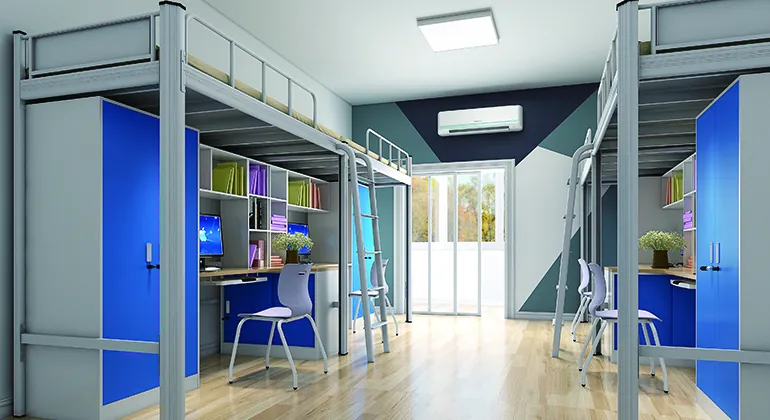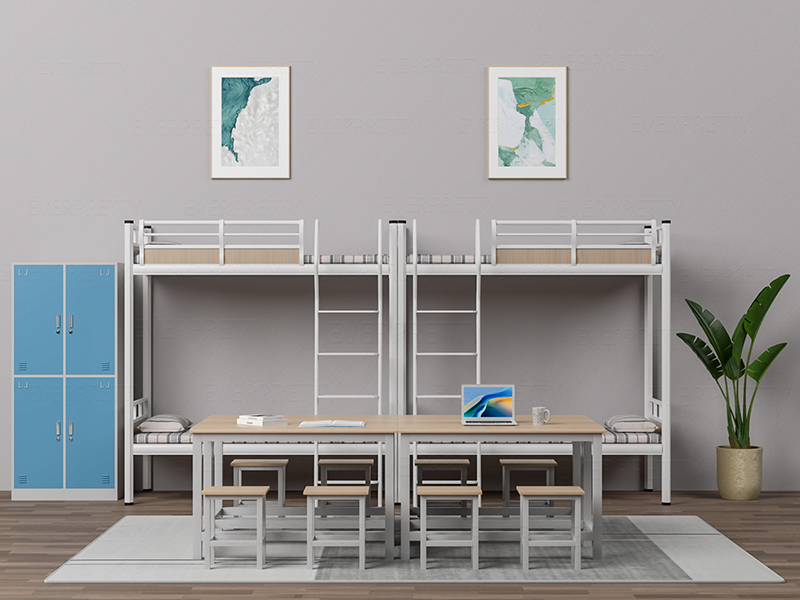

Southeast Asia is experiencing one of the fastest expansions of university-level education in the world. From Vietnam’s rapid private university growth to the Philippines’ large public university system, Malaysia’s international student hub ambitions, and Indonesia’s massive state-funded dormitory construction pipeline — the demand for quality, cost-efficient dormitory furniture across the region has never been higher.
For procurement officers, project developers, and government education bodies in Southeast Asia, this guide addresses the specific sourcing, specification, and logistics questions that arise when furnishing university dormitories in the regional context.
Table of Contents
ToggleThe Southeast Asian Dormitory Market: A Region Overview
| Country | Market Driver | Typical Buyer | Key Requirement |
| Vietnam | Private university expansion, government student housing investment | University procurement offices, developers | Cost efficiency, fast delivery, ACFTA duty reduction |
| Philippines | Large state universities, private Catholic university chains | Government procurement, school boards | Budget compliance, SGS certification, local-language support |
| Malaysia | International student residential colleges, private universities | Private developers, university facilities teams | Design quality, brand consistency, full-service supply |
| Indonesia | Government university dormitory construction program (SBSN) | Government contractors, BUMN-linked developers | Large volume capacity, competitive pricing, BV certification |
| Thailand | International school dormitories, private universities | Private school operators | Premium specification, hospitality-influenced design |
What Southeast Asian University Buyers Search For
Understanding B2B search behavior in Southeast Asia helps you identify whether a supplier’s content and capabilities match what buyers are actually looking for. Buyers in this region typically search across three stages of the procurement process:
Stage 1 — Market Research
- “university dormitory furniture supplier Southeast Asia”
- “school dormitory furniture manufacturer China export”
- “hostel furniture bulk order China price”
- “dormitory furniture cost per room Vietnam / Philippines / Malaysia”
Stage 2 — Supplier Qualification
- “China furniture factory certified export Southeast Asia”
- “dormitory furniture ISO SGS certified manufacturer”
- “furniture supplier DDP Vietnam / Philippines / Malaysia”
- “how to import furniture from China to [country]”
Stage 3 — Decision and Contact
- “dormitory furniture quotation request”
- “bulk bunk bed order manufacturer China”
- “furniture factory WhatsApp contact China dormitory”
Notably, WhatsApp is the primary communication channel for Southeast Asian B2B buyers at the contact stage — particularly in the Philippines, Malaysia, and Indonesia. A supplier’s WhatsApp availability and response speed is a significant conversion factor in this market.
Product Specifications for Southeast Asian Projects
Climate Adaptation: The Most Overlooked Specification Factor
Southeast Asia’s tropical climate — high year-round humidity, temperatures of 28–35°C, and intense seasonal rainfall — places specific demands on dormitory furniture that buyers in temperate markets do not face. Specifying furniture without considering tropical climate performance is one of the most common and costly procurement mistakes in the region.
| Material | Tropical Performance | Recommendation |
| Powder-coated steel (beds, frames) | Excellent — corrosion-resistant if coating is properly specified | Specify minimum 60 micron powder coat; salt spray test certification preferred |
| MFC board (18mm) | Good — moisture-resistant surface, susceptible to edge damage if unsealed | Specify ABS edge banding 2mm minimum; avoid areas with direct water exposure |
| Solid wood | Poor to moderate — expands, contracts, and warps with humidity | Not recommended for standard dormitory; suitable only for climate-controlled premium rooms |
| MDF | Poor — absorbs moisture and swells; not recommended in tropical climates | Avoid for structural panels; acceptable only for interior non-structural components |
| Upholstered furniture (sofas, chairs) | Variable — fabric choice critical | Specify moisture-resistant fabric (polyester, solution-dyed acrylic); avoid pure cotton |
Size Standards for Southeast Asian Markets
Room dimensions and bed size preferences vary across the region. These differences affect your furniture specification and should be confirmed before finalizing your product list:
- Bed size: 90×190cm and 100×200cm are both widely used. Philippine and Malaysian universities often use 90×190cm for space efficiency; Vietnamese student residences increasingly prefer 100×200cm for student comfort.
- Wardrobe depth: 50cm depth is standard; in very compact rooms (under 12m²) 45cm wardrobes are specified to preserve floor space.
- Desk height: 74–76cm standard; chair height 42–45cm. Average student height in Southeast Asia is lower than in Europe or the Middle East — confirm with your institution before specifying height-adjustable furniture.
- Ceiling height: older campus buildings in Vietnam and the Philippines often have 240–260cm ceilings. Confirm before specifying triple bunk beds (require 280cm+) or loft beds (require 260cm+).
Import Duties and ACFTA: How to Reduce Your Total Cost
The ASEAN-China Free Trade Agreement (ACFTA) provides preferential tariff rates for furniture imported from China across all ASEAN member states. For most furniture product categories, ACFTA reduces or eliminates import duties that would otherwise apply under most-favoured-nation (MFN) rates.
| Country | Standard MFN Duty | ACFTA Rate | Certificate Required |
| Vietnam | 5–25% | 0–5% | Form E (Certificate of Origin) |
| Philippines | 3–15% | 0–5% | Form E (Certificate of Origin) |
| Malaysia | 0–10% | 0% | Form E (Certificate of Origin) |
| Indonesia | 5–15% | 0–5% | Form E (Certificate of Origin) |
| Thailand | 10–20% | 0–5% | Form E (Certificate of Origin) |
To access ACFTA rates, your China furniture supplier must provide a Form E Certificate of Origin issued by the local Chinese customs authority. Always request this document before shipment — it cannot be issued retroactively after goods have cleared customs.
| Important: Tariff classification (HS code) determines which rate applies. Beds, wardrobes, and study desks are classified differently. Work with your local customs broker to confirm the correct HS code for each product category before committing to a total landed cost calculation. |
Sea Freight to Southeast Asia: Realistic Lead Times
| Origin Port | Destination | Transit Time | Container Type | Approx. Cost (20ft FCL) |
| Guangzhou / Shenzhen | Ho Chi Minh City, Vietnam | 5–9 days | 20ft or 40ft FCL | USD $1,600–$2,800 |
| Guangzhou / Shenzhen | Manila / Cebu, Philippines | 7–12 days | 20ft or 40ft FCL | USD $1,800–$3,000 |
| Guangzhou / Shenzhen | Port Klang / Penang, Malaysia | 6–10 days | 20ft or 40ft FCL | USD $1,400–$2,600 |
| Guangzhou / Shenzhen | Tanjung Priok, Indonesia | 8–13 days | 20ft or 40ft FCL | USD $2,000–$3,400 |
| Guangzhou / Shenzhen | Laem Chabang, Thailand | 7–11 days | 20ft or 40ft FCL | USD $1,800–$3,000 |
Freight rates are indicative and subject to market fluctuation. Request a current freight quote from your supplier or freight forwarder at time of order.
Choosing the Right Supplier for Southeast Asian Projects
Beyond price, Southeast Asian buyers report the following as the most important supplier selection criteria for dormitory furniture projects:
- DDP delivery capability: door-to-door delivery to the project site (not just FOB) removes the buyer’s need to manage freight, customs, and last-mile logistics — a major advantage for first-time importers and project teams without logistics expertise.
- English communication: the ability to communicate fluently in English throughout the project — not just at the inquiry stage — is consistently cited as a pain point. Buyers in the Philippines and Malaysia are particularly sensitive to communication quality.
- Sample quality and turnaround: Southeast Asian buyers frequently request physical samples before committing. Suppliers who can dispatch samples within 5–10 business days and credit sample cost against the bulk order are preferred.
- Regional experience: a supplier with documented delivery experience to your specific country — including knowledge of local port procedures, customs documentation requirements, and fumigation certification — reduces procurement risk significantly.
- After-sales responsiveness: replacement parts and damage claims are a reality in every large project. A supplier’s track record on post-delivery support matters for long-term institutional relationships.
| Topohut: Supplying Southeast Asian Universities for 25+ Years Topohut dormitory furniture has delivered dormitory furniture projects to universities, student residences, and staff accommodation across Vietnam, the Philippines, Malaysia, Indonesia, and Thailand. Our complete furniture solutions include free OEM design, ISO/SGS/TUV certified production, Form E Certificate of Origin for ACFTA duty reduction, and Door-to-Door DDP delivery to your project site. MOQ: 100 units | Warranty: 5–10 years | Lead time: 30–45 days production + sea freight | WhatsApp response: within 4 hours |
Frequently Asked Questions
Is Chinese dormitory furniture better than locally made furniture in Southeast Asia?
Quality is a function of specification and supplier selection — not origin. China’s leading institutional furniture manufacturers hold the same international certifications as suppliers anywhere in the world. At the same specification level, China factory-direct pricing is typically 30–50% lower than local equivalents in Southeast Asia, with wider OEM customization capability.
How long does it take to receive dormitory furniture from China in Southeast Asia?
Total lead time from order confirmation to on-site delivery in Southeast Asia is typically 7–11 weeks: 30–45 days production, 5–13 days sea freight depending on destination port, and 3–7 days customs clearance and local delivery. Plan your project timeline accordingly — orders placed with a 12-week lead time allow adequate buffer for first-time imports.
What documents do I need to import furniture from China to Southeast Asia?
Core documents: Commercial Invoice, Packing List, Bill of Lading, Certificate of Origin (Form E for ACFTA), Fumigation Certificate (required for wood products in most ASEAN countries). Your supplier should prepare all export documents; your local customs broker handles import clearance.