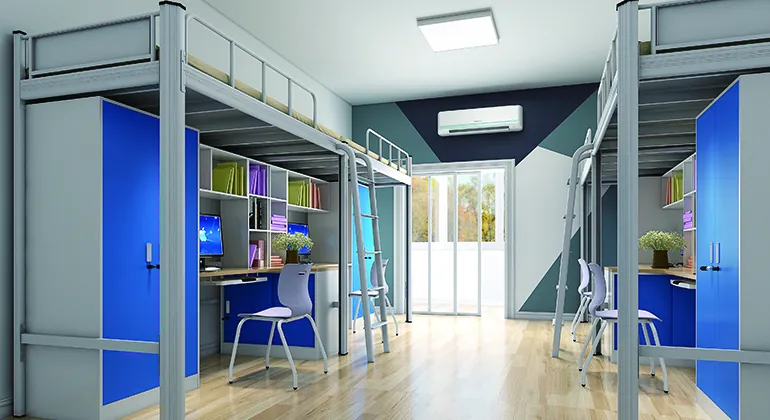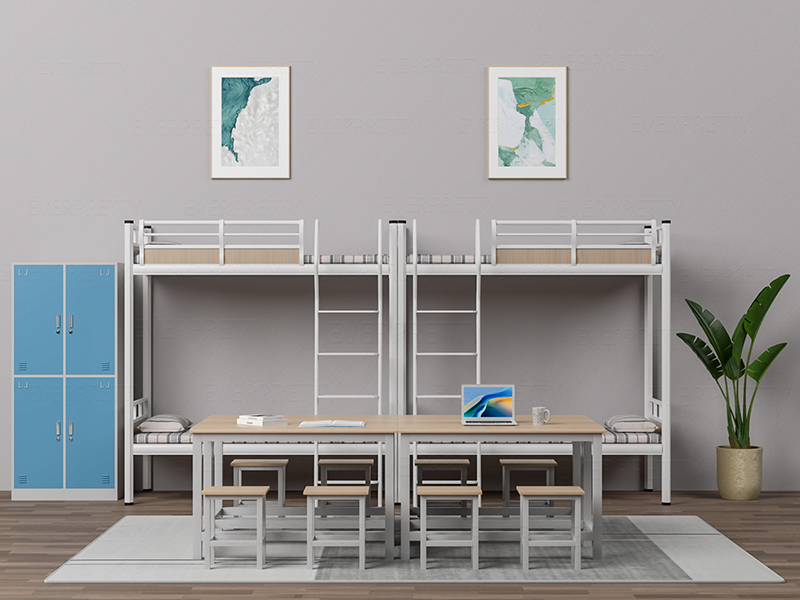
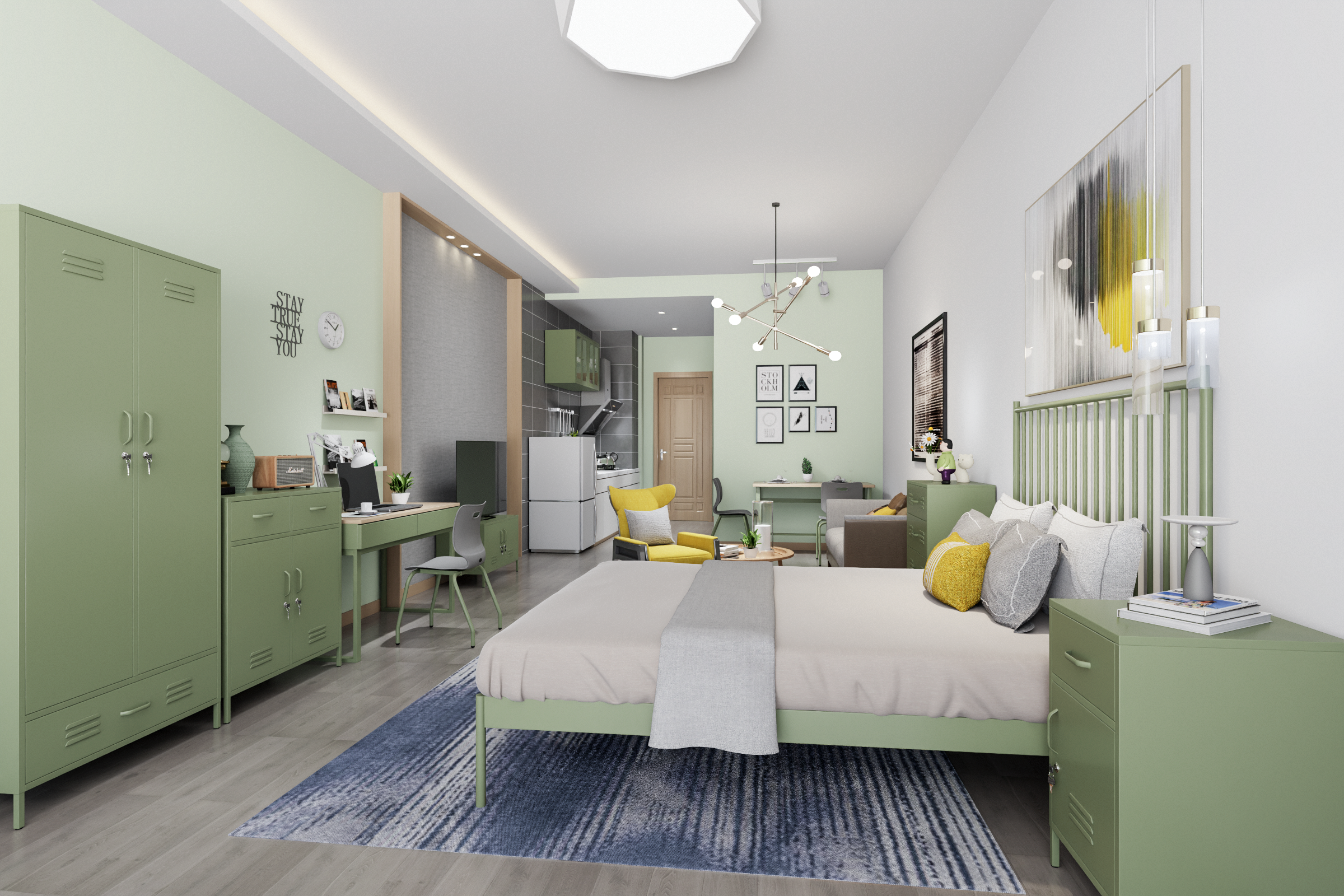
The United Arab Emirates and Saudi Arabia represent the two highest-value and most active university and student housing markets in the Middle East. The UAE’s ambition to become a global education hub — with branches of NYU, Sorbonne, the Louvre, and dozens of international institutions operating in Abu Dhabi and Dubai — is generating a pipeline of premium student residential projects. Saudi Arabia’s Vision 2030 education reform program includes major investment in university campus infrastructure, student housing, and staff accommodation across its 30+ public universities.
For furniture suppliers and procurement teams, both markets offer significant opportunity — but require understanding of how FF&E procurement works in the regional institutional context.
Table of Contents
ToggleHow FF&E Procurement Works in UAE and Saudi Projects
Unlike direct procurement in Southeast Asia or Africa — where a university or developer typically contacts furniture suppliers directly — large UAE and Saudi Arabia institutional projects typically procure furniture through a structured FF&E process:
| Phase | Who Leads | Supplier Involvement | Timeline |
| Concept and specification | Interior designer / FF&E consultant | None yet — design is being developed | 12–24 months before completion |
| Supplier pre-qualification | FF&E consultant / main contractor | Submit PQ documents: ISO, BV, track record, capacity | 9–18 months before completion |
| Tender (BOQ pricing) | FF&E consultant issues tender | Submit BOQ pricing + technical compliance + samples | 6–12 months before completion |
| Evaluation and award | Client or PMC | Provide clarifications, present samples | 3–6 months before completion |
| Production and delivery | Awarded supplier | Manufacture, QC inspection, deliver to site | 2–5 months before completion |
| Installation and snagging | Awarded supplier + FF&E consultant | Install, address punch list items | 1–2 months before completion |
The key implication: supplier qualification happens months or years before delivery. Suppliers who are not on the FF&E consultant’s or main contractor’s approved supplier list will not receive the tender invitation — regardless of how good their product or price is. Being proactively registered with the main FF&E consultants and main contractors active in UAE and Saudi Arabia is the primary route to market in these countries.
UAE Student Housing Market: What Is Being Built
UAE’s student housing development is concentrated in three locations:
Abu Dhabi — ADEC and University City
Abu Dhabi’s University City and the surrounding ADEC (Abu Dhabi Education Council) development zone house multiple international university branch campuses — NYU Abu Dhabi, Sorbonne Abu Dhabi, Paris-Sorbonne, and others — as well as UAE domestic universities. Student residences in this context are premium by design — competing with private hotel-standard accommodation to attract international students.
Typical specification for Abu Dhabi premium student residences:
- Single-occupancy rooms with Murphy bed or loft bed + integrated study system
- Premium wardrobe with full-length mirror and soft-close hardware
- Hospitality-grade common area furniture: modular sofas, designer lounge chairs
- Outdoor terrace furniture in weather-resistant materials
- Fire retardant certification (BS 5852) on all upholstered items — mandatory
Dubai — DIFC, Dubai International Academic City
Dubai’s education free zones (DIFC Education, Dubai International Academic City) host dozens of international university branches and private colleges. Student accommodation attached to these campuses ranges from standard dormitory-grade to co-living premium, depending on the institution’s target student profile.
Sharjah — University City
The University of Sharjah’s large campus and the surrounding University City development accommodate a significant domestic student population, with dormitory furniture typically at mid-range institutional specification — higher quality than standard Southeast Asian dormitories but below Abu Dhabi’s international branch campus standard.
Saudi Arabia Student Housing Market: Vision 2030 and Beyond
Saudi Arabia’s dormitory furniture market is driven by two distinct forces: the existing large public university system (30+ major universities with ongoing expansion) and the new city and mega-project developments (NEOM, Red Sea Project, Diriyah) that require residential facilities for university, school, and training programs as part of their mixed-use development.
Public University Expansion
Saudi Arabia’s public university system — King Abdulaziz University (Jeddah), King Saud University (Riyadh), King Fahd University of Petroleum (Dhahran), and others — are continuously expanding dormitory capacity. Procurement follows formal government tender processes with SASO compliance requirements and strong local content preferences.
Women’s University Accommodation
Saudi Arabia’s expanding female university enrollment (now over 50% of the university population) is driving significant investment in women’s dormitory facilities — with distinct specification requirements: enhanced privacy features, stronger wardrobe locking mechanisms, and common areas designed for indoor social and sports activity. This segment is underserved in the current supplier landscape.
Vision 2030 New City Projects
NEOM’s Sindalah island development, the Red Sea Project’s hospitality training academy, and Diriyah’s heritage-adjacent university facilities all require furniture specification that blends institutional function with premium aesthetic standards — a combination that favours Chinese OEM manufacturers with strong design capability.
Key Certifications Required for UAE and Saudi Projects
| Certification | UAE Requirement | Saudi Arabia Requirement | Notes |
| ISO 9001 | Mandatory for most project tenders | Mandatory for government tenders | Current certificate (not expired) |
| BV or SGS Factory Audit | Strongly preferred; mandatory for premium projects | Required for ARAMCO and major government projects | Request audit specifically for furniture production |
| Fire retardant (BS 5852 / NFPA) | Mandatory for upholstered items — UAE Civil Defence | Required for all institutional accommodation | Non-upholstered items typically exempt |
| SASO product registration | Not required | Required for some furniture product categories | Check current SASO product scope — evolving requirements |
| Formaldehyde emission (E1/E0) | Preferred — increasingly specified | Preferred | E0 specified in premium and health-sensitive projects |
How to Engage FF&E Consultants in the UAE and Saudi Market
The most effective route to securing UAE and Saudi dormitory furniture projects is to be known to the FF&E consultants and main contractors who manage these projects before tenders are issued. Practical steps:
- Identify the active FF&E consultants: firms such as Wilson Associates, HBA (Hirsch Bedner Associates), WATG, and regional consultants like SSH and KEO International Consultants are active in Gulf institutional and student housing projects. Register with their supplier databases.
- Present at key trade events: The Big 5 (Dubai, November) and INDEX Dubai (May) are the primary furniture and interiors trade shows in the Middle East. Physical presence at these events with sample products is the most effective introduction to Gulf consultants and contractors.
- Develop an Arabic-language one-pager: while English is used professionally, a company profile in Arabic signals respect for the market and is appreciated by government-linked procurement teams in Saudi Arabia and Abu Dhabi.
- Provide a Gulf client reference list: even one completed project reference in the UAE or Saudi Arabia transforms your credibility from ‘unknown China supplier’ to ‘proven Gulf supplier’. If you are new to the market, offer a pilot project at competitive pricing to build your regional reference portfolio.
| Topohut: FF&E Capability for UAE and Saudi Projects Topohut furniture manufacturer holds ISO 9001, SGS, TUV, and BV certifications required by UAE and Saudi Arabia institutional procurement. We provide full FF&E documentation packages — product data sheets, test reports, and factory audit certificates — in formats accepted by Gulf consultants and main contractors.
For BOQ pricing, technical submissions, and sample arrangements for UAE and Saudi projects, contact our project team via our certifications page or direct project inquiry. |
Frequently Asked Questions
Can a Chinese furniture factory be directly on a UAE or Saudi government-approved supplier list?
Yes. Many UAE government entities (including government hospitality, education authorities, and municipal developers) maintain approved supplier lists that include international manufacturers. Registration typically requires ISO 9001, a completed track record of comparable projects, financial standing documentation, and in some cases a local UAE agent or representative. Saudi government approved supplier lists similarly require SASO compliance documentation and in some categories a local Saudi agent is required.
How important is having a local agent or representative in the UAE or Saudi Arabia?
Having a local agent is not legally required for most furniture exports to UAE or Saudi Arabia. However, a local agent or representative significantly accelerates market penetration — they can attend site visits, submit documents in person, and maintain relationships with consultants and contractors on your behalf. For Saudi Arabia government projects in particular, a local agent familiar with government procurement processes is a significant advantage.