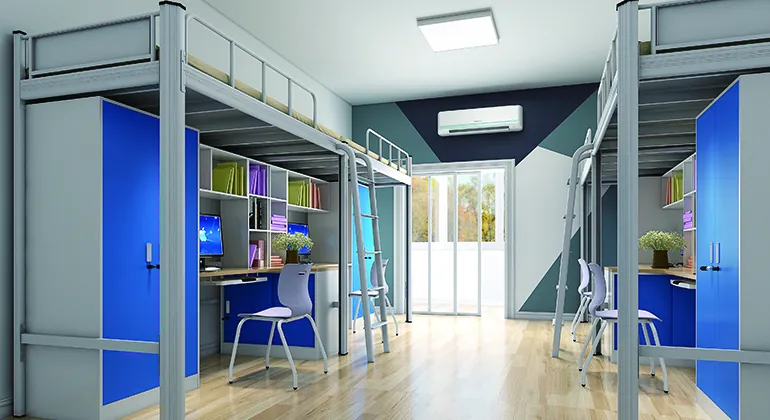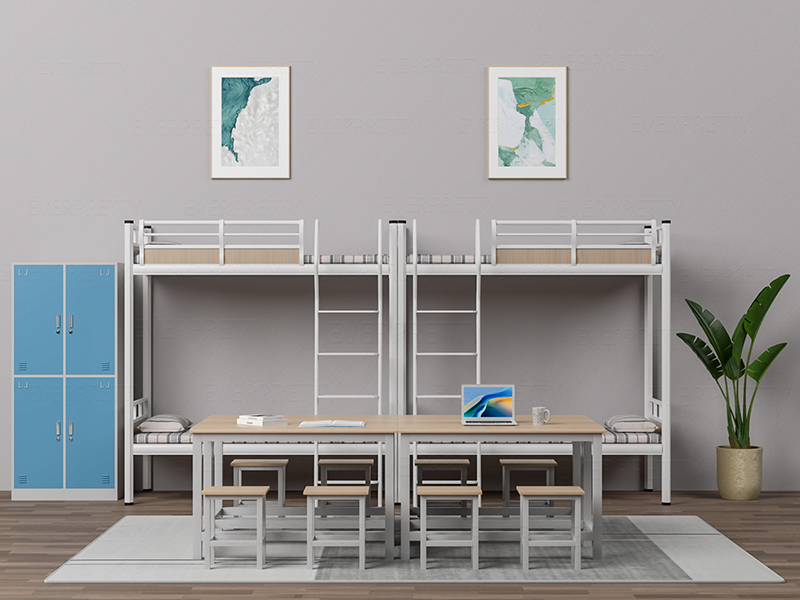

Sourcing dormitory furniture from China can save universities and student housing developers 30–50% compared to buying locally. But for procurement teams doing it for the first time, the process can feel overwhelming — factory vetting, quality checks, shipping logistics, customs clearance, and payment terms all need to be navigated correctly.
This guide walks you through every step of the process, from defining your requirements to receiving furniture on site. It is written specifically for university procurement officers, real estate developers, and project managers sourcing student accommodation furniture for Southeast Asian markets.
| What This Guide Covers: Step 1: Define your furniture specification Step 2: Find and shortlist China furniture factories Step 3: Request quotes and compare suppliers Step 4: Verify the factory before committing Step 5: Confirm samples and approve production Step 6: Manage quality control and production Step 7: Handle shipping, customs, and delivery Step 8: Receive, inspect, and install on site |
Table of Contents
ToggleWhy Source Dormitory Furniture from China?
China is the world’s largest furniture manufacturer for good reason. For university and student housing projects, sourcing from China offers several structural advantages over local purchasing:
| Factor | China Factory (Direct) | Local Southeast Asia Supplier |
| Unit cost (mid-range room set) | $400 – $650 | $700 – $1,100 |
| Customization availability | Full OEM / ODM | Limited |
| Production capacity | 500–5,000+ rooms/month | Typically under 200 rooms |
| Lead time (production) | 25–45 days | 30–60 days |
| Certification standards | ISO, SGS, BV, FSC available | Varies widely |
The primary trade-off is logistics complexity — shipping, import duties, and lead time planning. This guide will show you how to manage each of these confidently.
Step 1: Define Your Furniture Specification
- Before contacting any supplier, you need a clear specification document. Factories cannot give you an accurate quote without it, and vague briefs lead to mismatched samples and wasted time.
- Your specification document should include:
- Room types: single occupancy, double, triple, suite — specify each separately
- Room count per type: g. 150 single rooms, 80 double rooms
- Product list per room: bed (type and size), mattress, desk, chair, wardrobe, storage, etc.
- Material preference: MFC board, MDF, steel frame, solid wood — or leave open for factory recommendation
- Colour and finish: if you have brand colours, provide Pantone or RAL codes
- Key dimensions: ceiling height, door width, room footprint — critical for wardrobes and loft beds
- Certifications required: FSC, CARB P2, fire retardant, anti-tip standards for your market
Delivery port: your nearest seaport — Ho Chi Minh City, Manila, Port Klang, etc.
| Pro Tip: If you are unsure of the specification, send your room floor plans and photos of your space to the factory. A good supplier will help you design the right product configuration for your layout — this is part of the service at Topohut. |
Step 2: Find and Shortlist China Furniture Factories
There are three main channels for finding verified China dormitory furniture manufacturers:
Channel 1: B2B Sourcing Platforms
- Platforms like Alibaba International, Made-in-China.com, and Global Sources list thousands of furniture factories. Use search terms like:
- “dormitory furniture manufacturer”
- “student bed factory China”
“contract furniture supplier OEM”
Filter for: Gold Supplier status, Trade Assurance enabled, verified factory (not trading company), and minimum 3 years on platform.
Channel 2: Trade Shows
The Canton Fair (Guangzhou, held twice yearly) and CIFF (China International Furniture Fair) are the best places to meet factory representatives in person, see samples, and build relationships. Most serious buyers visit at least once before placing large orders.
Channel 3: Referrals and Direct Search
- Ask other property developers or university procurement teams in your network who they use. Direct referrals carry built-in trust. You can also use Google to search for factory websites directly — companies with professional English-language websites and published project portfolios are typically more export-experienced.
- Shortlist criteria — aim for 3–5 factories to compare:
- Specializes in contract / commercial furniture (not just residential)
- Has export experience to your target country
- Can produce the full product range you need (not just beds or just desks)
- Has visible certifications and quality documentation
Responds promptly and professionally to initial enquiries
Step 3: Request Quotes and Compare Suppliers
- Send your specification document (from Step 1) to each shortlisted factory and request a formal quotation. A complete quote should include:
- Unit price per product (FOB China)
- Total price for your order volume
- Payment terms (typically 30% deposit, 70% before shipment)
- Production lead time
- Packaging details (flat-pack or assembled)
- Sample availability and cost
Shipping estimate (optional but useful)
| Red Flag: If a factory gives you a quote without asking for your specification, floor plans, or room count — treat this as a warning sign. Accurate pricing requires accurate information. A factory quoting without details is likely providing a low-ball price they cannot honour after production. |
When comparing quotes, do not compare on price alone. Compare: lead time, payment terms, sample policy, after-sales support, and whether the factory can supply all items or only part of your list.
Step 4: Verify the Factory Before Committing
This is the step most first-time buyers skip — and the one that causes the most problems. Before placing a deposit, verify the factory through at least two of the following methods:
| A | Request their certification documents Ask for: ISO 9001 (quality management), FSC (sustainable wood), SGS or BV inspection reports, and any fire or safety test certificates relevant to your market. A reputable factory will share these without hesitation. You can view Topohut’s certifications here. |
| B | Request a factory audit or third-party inspection For orders over USD $30,000, commission a third-party factory audit through SGS, Bureau Veritas (BV), or a local sourcing agent. Cost is typically $300–$600 and it verifies production capacity, quality systems, and worker conditions. |
| C | Video call or factory visit A video factory tour is now standard practice. Ask to see the production floor, material storage, and quality inspection area. If your order is large enough, visit in person — most factories will accommodate a buyer visit and it dramatically increases confidence on both sides. |
| D | Request references from past buyers Ask for contact details of 2–3 existing customers in your region (or similar markets). A factory that cannot provide references has not successfully exported to buyers like you. |
Step 5: Confirm Samples and Approve Production
- Never skip the sample stage for a large dormitory order. Samples protect both buyer and factory by establishing an agreed physical standard before mass production begins.
- How the sample process works:
- Pre-production sample (PP sample): factory produces 1–2 units of each key product. You review construction, finish quality, colour, and dimensions.
- Sample approval: you or your agent signs off on the sample physically or via detailed photo/video documentation with measurements.
Production reference: the approved sample becomes the contractual quality standard. All bulk production must match it.
Typical sample lead time is 7–15 days. Sample cost is usually charged upfront and credited back against your first bulk order.
| Important: Get your samples inspected on-site if possible, or by a local agent in China. Photos do not capture texture, joint strength, or drawer smoothness. A physical review prevents the most common quality complaints. |
Step 6: Manage Quality Control During Production
Once production begins, quality control is your primary risk management tool. For any order over 100 room sets, implement at least one of the following:
In-line Inspection (During Production)
A third-party inspector visits the factory mid-production to check material inputs, panel cutting accuracy, and hardware quality before the furniture is assembled. Issues caught here are far cheaper to fix than post-production.
Pre-Shipment Inspection (PSI)
This is the most important QC step. An inspector examines finished units before they are packed for shipment — checking dimensions, finish quality, hardware function, and packaging integrity. Pass rate on your specification should be 98%+ before releasing the shipment.
Cost: $250–$450 per inspection day. Most small-to-medium orders require 1 inspection day. This small investment prevents a container of furniture you cannot use arriving at your port.
Our full service solution includes production coordination, QC management, and pre-shipment inspection assistance for all major orders.
Step 7: Handle Shipping, Customs, and Delivery
Sea freight is the standard shipping method for dormitory furniture from China to Southeast Asia. Here is what to expect:
| Route | Transit Time | Container Type | Approx. Freight Cost |
| China → Vietnam (HCMC / Haiphong) | 6 – 12 days | 20ft or 40ft FCL | USD $1,800 – $3,200 |
| China → Philippines (Manila / Cebu) | 8 – 14 days | 20ft or 40ft FCL | USD $2,000 – $3,500 |
| China → Malaysia (Port Klang / Penang) | 7 – 12 days | 20ft or 40ft FCL | USD $1,600 – $2,800 |
| China → Indonesia (Jakarta / Surabaya) | 9 – 16 days | 20ft or 40ft FCL | USD $2,200 – $3,800 |
- Key shipping documents you will need:
- Commercial Invoice and Packing List (supplied by factory)
- Bill of Lading (B/L) — issued by shipping line
- Certificate of Origin (for ASEAN-China FTA duty reduction)
- Fumigation Certificate (required for wood products in most SE Asian countries)
Product test reports / certifications (if required by customs)
Your factory or freight forwarder will prepare most of these documents. Ensure you have a local customs broker in your destination country to handle clearance — this typically costs $200–$500 per shipment.
Step 8: Receive, Inspect, and Install On Site
- When your container arrives, do not sign the delivery receipt until you have done a basic inspection:
- Count all cartons against the packing list before the truck leaves.
- Check for visible damage to external packaging. Note and photograph any damage before signing.
- Open 5–10% of cartons at random to check interior product condition.
Report any shortages or damage to your supplier and freight insurer within 48 hours.
For assembly and installation, most dormitory furniture from China is shipped flat-pack to reduce shipping volume. Local installation teams can typically assemble a single room set in 45–90 minutes. For a 200-room project, budget 3–5 days for a team of 6–8 installers.
Typical Project Timeline: 200-Room Dormitory, China to Southeast Asia
|
5 Common Mistakes to Avoid
- Choosing the cheapest quote. The lowest price usually means compromised materials or an inexperienced exporter. A product that fails in year 2 costs more than buying right the first time.
- Skipping samples. Mass production will match your approved sample — if you approved nothing, you have no basis for a quality dispute.
- No pre-shipment inspection. Once furniture is on the water, your options are limited. PSI is your last line of defence.
- Underestimating lead time. 10–16 weeks total is the realistic timeline. Projects that try to compress this without factory priority arrangements face delays.
- Not using ACFTA duty reduction. The ASEAN-China Free Trade Agreement reduces or eliminates import duties on most furniture categories. Always request a Certificate of Origin from your factory.
| Start Your Dormitory Furniture Sourcing the Right Way At Topohut factory, we have guided university and developer clients through this entire sourcing process — from initial specification to on-site delivery across Southeast Asia, the Middle East, and Africa. Our full service solution covers production management, QC inspection, sea freight coordination, and documentation support.
What you get when you work with us:
• Detailed itemized quote within 48 hours • Physical samples dispatched within 10 business days • ISO-certified production with pre-shipment inspection • Full export documentation package • Direct sea freight to your port — Vietnam, Philippines, Malaysia and more
Ready to get started? Contact our project team and share your room count and specification — we will send you a full proposal within 24 hours. |
Frequently Asked Questions
Is it safe to buy dormitory furniture directly from a China factory?
Yes, provided you follow a structured verification process. Request certifications, order samples, use a pre-shipment inspection, and pay via bank transfer (T/T) or Trade Assurance rather than informal channels. Thousands of universities and developers worldwide source successfully from China factories every year.
What is the minimum order size for a China dormitory furniture factory?
Most factories have a minimum of 50–100 room sets for export orders. Below this, unit pricing is less competitive and factories may not prioritize smaller buyers. If your project is under 50 rooms, consider grouping with a future phase to reach a more attractive volume.
Do I need a sourcing agent?
Not necessarily. If you source directly from a factory with strong English communication and export experience, a sourcing agent adds cost (typically 5–8% commission) without adding much value. However, agents are useful if you need to source from multiple factories, require on-the-ground inspection support, or are placing your first China order and want a local guide.
How do I reduce the risk of poor quality furniture arriving?
The three-layer protection is: approved sample + pre-shipment inspection + freight insurance. Together these cost less than 2% of your order value and prevent the vast majority of quality problems from reaching your site.
Conclusion
Sourcing dormitory furniture from China is not complicated — but it does require a disciplined process. Follow the eight steps in this guide, invest time in factory verification and sample approval, and commission a pre-shipment inspection for every significant order.
Done right, you will receive quality furniture that meets your specification, at a price well below local alternatives, delivered to your project site on schedule.
If you would like help navigating any part of this process, our team at Topohut is happy to answer your questions — no obligation, no sales pressure. Just send us your project details and we will advise on the best approach for your dormitory build.