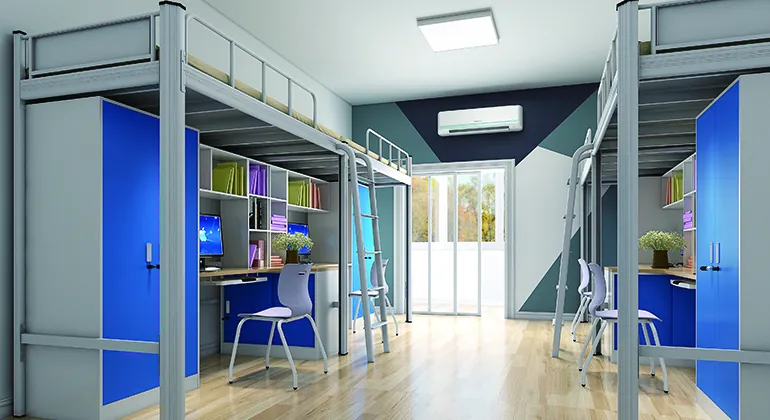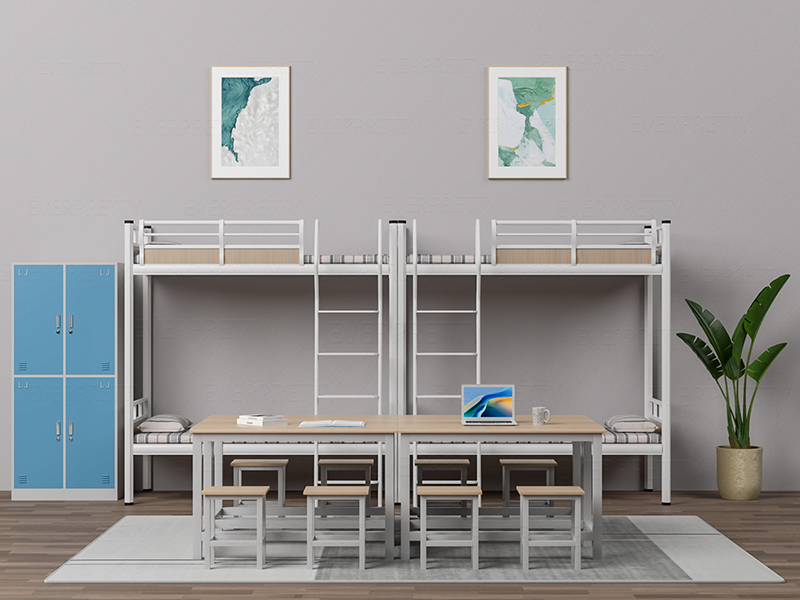
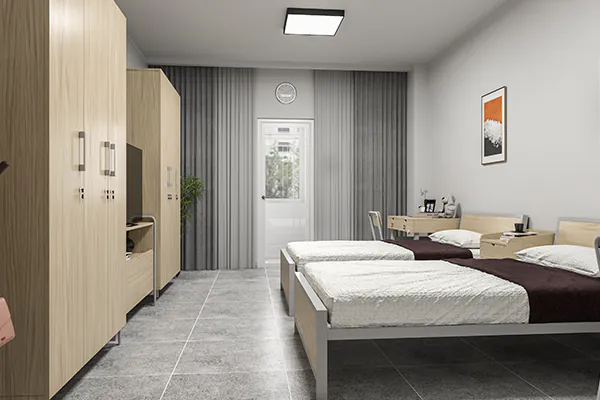
The Gulf Cooperation Council’s pipeline of mega-projects — NEOM in Saudi Arabia, the ongoing expansion of UAE’s hospitality and industrial sectors, Qatar’s legacy infrastructure development, and Kuwait’s Vision 2035 — collectively represent one of the world’s largest and most active markets for staff and worker accommodation furniture.
Unlike university dormitory furniture, staff accommodation in the Gulf serves a specific and demanding operational environment: 24-hour shift rotations, multi-nationality resident populations, extreme external temperatures, and facilities management teams with limited maintenance budgets. Getting the specification right for this environment requires different thinking than standard student housing procurement.
Table of Contents
ToggleWho Buys Staff Accommodation Furniture in the Gulf
Understanding the buyer landscape is essential for suppliers. Staff accommodation furniture procurement in the Gulf flows through several distinct channels:
| Buyer Type | Typical Project Scale | How They Source | Key Priority |
| Main construction contractor (Tier 1) | 500–10,000 beds | Direct factory RFQ or FF&E tender | Volume pricing, DDP delivery, tight project timelines |
| Project management company (PMC) | 1,000–50,000+ beds (mega-projects) | Formal international tender with BOQ | Certification compliance, financial guarantees, track record |
| Facilities management company | 100–1,000 beds (ongoing supply) | Framework agreement, pre-approved supplier list | Consistency, replacement parts availability, service support |
| Government entity (ARAMCO, ADNOC, KAB) | 1,000–20,000+ beds | Government tender process | SASO/BV certification, local content requirements (Saudi) |
| Labour accommodation operator | 200–2,000 beds | Direct inquiry, competitive quotes | Cost efficiency, durability, minimal maintenance |
Specification Requirements for Gulf Staff Accommodation
1. Durability for 24-Hour Rotation Use
Staff accommodation furniture in the Gulf is used on a 24-hour rotation basis — beds are in use around the clock across three work shifts. This creates usage intensity significantly higher than a university dormitory (where beds are used approximately 8 hours per day). Specification adjustments required for rotation use:
- Bed frames: specify steel tube minimum 50×50mm, 1.8mm wall thickness for rotation-use bunk beds — heavier than standard student dormitory spec (40×40mm, 1.5mm)
- Mattresses: specify high-density foam minimum 38kg/m³ for rotation accommodation (vs 30kg/m³ standard). Compress testing to 100,000 cycles minimum (vs 50,000 for standard). Rotation mattresses wear 2.5× faster than standard use
- Hardware: specify grade 304 stainless steel for all external hardware in Gulf climate — the combination of heat, humidity, and salt air is more aggressive than most Southeast Asian coastal environments
- Powder coat: minimum 80 microns for all steel furniture in Gulf climate; 100 microns for outdoor or semi-outdoor areas. Request salt spray test result minimum 1,000 hours to ASTM B117
2. Maintenance Simplicity
Gulf facilities management teams managing large accommodation camps often have limited technical resources. Furniture that requires specialist knowledge or imported components to repair is a liability. Specify:
- Modular bolt-together construction — any panel or component replaceable without specialized tools
- Standard hardware sizes — M6 and M8 bolts compatible with locally available replacements
- Replaceable bed slats — individual slat replacement rather than full base replacement
- Minimal moving parts — avoid mechanisms in standard staff accommodation furniture
3. Climate Performance in Gulf Conditions
The Gulf climate presents the most demanding conditions of any major furniture market: ambient temperatures of 40–50°C in summer, combined with high humidity in coastal areas and extreme dust in desert locations. Specific requirements:
- Powder coat for Gulf climate: high-temperature powder coat formulations maintain flexibility and adhesion at 50°C+ — standard powder coat can become brittle and crack at these temperatures. Ask your supplier to confirm powder coat suitability for 50°C+ ambient temperature
- MFC panel performance in Gulf heat: extreme heat accelerates glue bond degradation between the melamine surface and chipboard core. Specify MFC with minimum 680kg/m³ board density and urea-formaldehyde glue rated for 60°C+ continuous temperature
- Ventilation design: air-conditioned rooms cycling between 22°C (AC-cooled) and 45°C+ (when AC is off or door is open) create condensation risk on cold surfaces. Specify ventilated back panels on wardrobes and open-base designs for storage to prevent moisture accumulation
4. Cultural and Regulatory Considerations
Staff accommodation in the Gulf houses multi-nationality workforces — South Asian, Southeast Asian, African, and Arab workers — with different religious and cultural expectations. Furniture specification should consider:
- Prayer space: some accommodation blocks require a clear floor space for daily prayer — furniture should allow rearrangement without disassembly
- Modesty in shared accommodation: full wardrobes with locks are standard in Gulf staff accommodation — open shelving is not culturally appropriate for shared rooms
- No alcohol-associated furniture: bar stools, wine racks, and related items are inappropriate for Gulf staff accommodation
- Saudi Arabia local content (Nitaqat): large Saudi projects may require documentation of Saudi-sourced components or local assembly — confirm requirements at tender stage
Standard Furniture List for Gulf Staff Accommodation
| Item | Standard Spec | Gulf Upgrade Spec | Notes |
| Bunk bed (2-tier) | Steel 40×40mm, 1.5mm, 60μm coat | Steel 50×50mm, 1.8mm, 80μm coat | 100μm for coastal locations |
| Single bed (VIP staff) | Steel or MFC, standard | Steel frame, 80μm coat | For senior staff or single occupancy |
| Mattress | 25kg/m³ foam, 15cm | 38kg/m³ foam, 18cm, 100k cycle test | Rotation use demands higher density |
| Wardrobe | 2-door MFC, standard lock | Steel wardrobe or 18mm MFC, deadbolt lock | Steel preferred for high-turnover accommodation |
| Study/work desk | Standard MFC 100cm | Heavy-duty MFC 18mm, metal leg | For multi-use (study and storage surface) |
| Locker (personal) | MFC, cam lock | Steel, key lock or combination lock | Steel lockers preferred in industrial accommodation |
| Common area sofa | Standard fabric | Commercial-grade fabric, 38kg/m³ foam | Anti-microbial and stain-resistant fabric |
Procurement Process for Gulf Projects
Gulf staff accommodation procurement follows one of two paths, each with different engagement requirements:
Path 1: Government / Mega-Project Tender
NEOM, ARAMCO, ADNOC, and government housing authorities follow formal tender processes with pre-qualification, BOQ submission, and commercial evaluation stages. For suppliers entering this process:
- Pre-qualification: submit company profile, ISO certificate, BV/SGS audit reports, bank references, and experience evidence. Suppliers without BV certification are typically disqualified here.
- BOQ pricing: price each line item in the provided Bill of Quantities exactly. Do not substitute products or omit items — partial bids are typically rejected.
- Technical submission: provide product data sheets, test reports, and samples for all specified items. Gulf consultants are thorough in technical review.
- Commercial evaluation: price is evaluated last, after technical qualification. A supplier with full certification and strong technical submission who is 10–15% above the lowest bid frequently wins over an uncertified cheaper supplier.
Path 2: Contractor Direct Inquiry
Tier-1 and Tier-2 contractors managing Gulf projects often source directly from suppliers with a faster, less formal process. They typically:
- Send an RFQ based on a product list and specification, requesting pricing within 5–10 business days
- Request samples for key items (bed frames, mattresses, wardrobes) for physical inspection
- Make decisions faster — sometimes within 2–4 weeks of initial inquiry
- Require DDP delivery capability and confirmed delivery schedule against their project programme
| Topohut: Built for Gulf Project Standards Topohut dormitory furniture supplies staff accommodation and student housing projects across the Gulf — UAE, Saudi Arabia, Qatar, Kuwait, and Oman. Our Gulf-standard production specification includes 80-micron powder coat, grade 304 stainless steel hardware, and high-density rotation-rated mattresses. ISO 9001, SGS, TUV, and BV documentation provided as standard. DDP delivery to Jebel Ali, Jeddah, Hamad Port, and other Gulf ports. Contact our project team for BOQ pricing, certification documentation, and sample arrangements: topohut.com/contact-us. |
Frequently Asked Questions
What is the difference between worker accommodation and staff accommodation in the Gulf?
In Gulf terminology, ‘worker accommodation’ typically refers to housing for construction, manufacturing, and low-wage sector employees — characterised by higher density (4–8 per room), basic specification, and camp-style facilities. ‘Staff accommodation’ refers to housing for skilled workers, engineers, and professional staff — typically lower density (1–2 per room), higher specification, with individual facilities. Furniture specification differs significantly between the two categories, with staff accommodation approaching student residence standards.
How long does furniture last in Gulf staff accommodation conditions?
With Gulf-appropriate specification (as outlined in this guide), steel bunk beds should last 10–15 years even in rotation use. MFC panel furniture (wardrobes, desks) typically lasts 7–10 years if properly specified for the climate. Standard (non-Gulf) specification furniture often fails within 3–5 years due to powder coat degradation, edge banding failure, and joint loosening from thermal cycling.