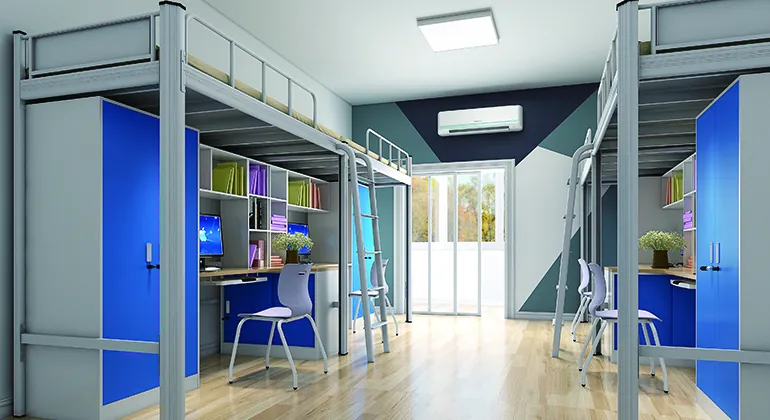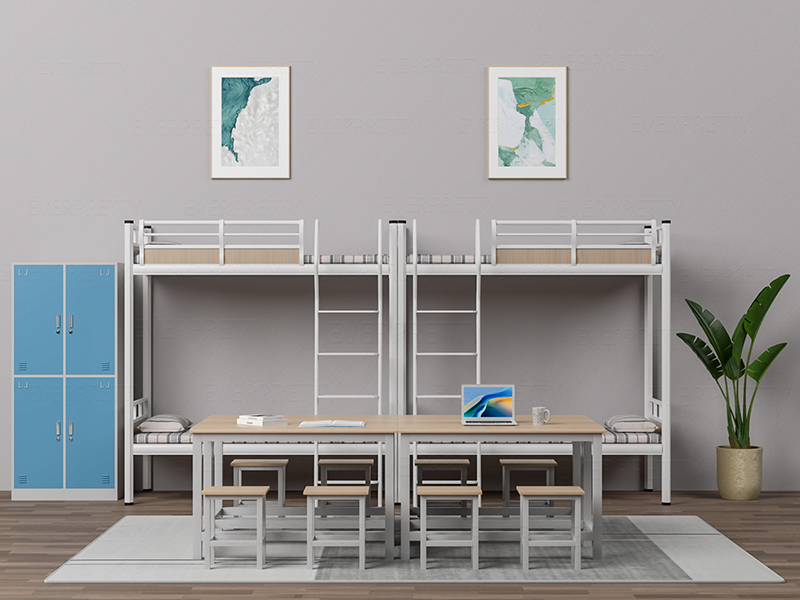
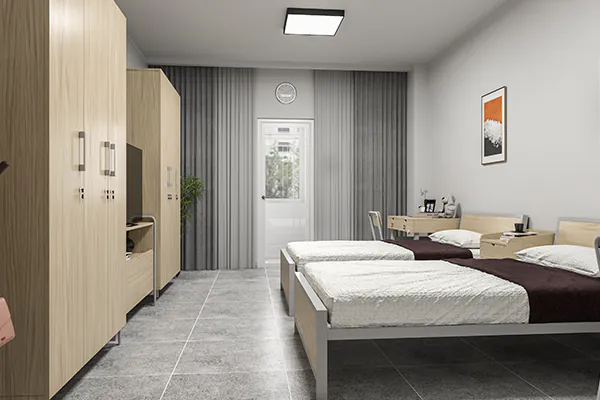
Southeast Asia is in the middle of a student housing construction cycle unlike anything the region has seen before. Private universities in Vietnam and the Philippines are building purpose-built residence halls for the first time. Malaysia is positioning itself as a regional hub for international students with new premium residential colleges. Indonesia’s government has committed billions in funding to campus infrastructure. Thailand’s international school sector is expanding into boarding accommodation.
For property developers, university administrators, and government procurement teams caught in this wave, furniture is one of the largest and most complex procurement decisions in the project. This report provides a current-market perspective on the trends shaping what is being specified, how it is being procured, and what experienced buyers are doing differently in 2025.
Table of Contents
ToggleMarket Context: Why the Boom Is Happening Now
| Country | Key Driver | Scale | Implication for Furniture Buyers |
| Vietnam | Government targets 60% university enrollment rate by 2030; private university licensing surge | 30,000+ new dormitory beds expected 2024–2027 | High-volume, cost-efficient specification; fast procurement timelines |
| Philippines | CHED-mandated dormitory provision requirements for private HEIs; OFW remittance-funded education spending boom | Large state university expansions (UP, PNU, Visayas campuses) | Government procurement compliance; SGS certification required |
| Malaysia | Malaysia Education Blueprint targets 250,000 international students by 2025 | New residential colleges at public universities; private UCSI, HELP, Taylor’s expansions | Premium specification; co-living influenced design |
| Indonesia | SBSN (Sukuk Negara) funding for state university infrastructure; PTNBH autonomy enabling new campus builds | 20+ major state university dormitory projects 2023–2026 | Large volume; BV/ISO certification; competitive pricing |
| Thailand | International school expansion in Bangkok, Chiang Mai; IB curriculum school boarding requirements | 50+ new international school boarding facilities planned 2024–2026 | Premium, hospitality-influenced specification; English-language communication essential |
Trend 1: From Single-Room to Full FF&E Specification
Five years ago, most Southeast Asian university dormitory procurement covered the bedroom only: bed, desk, chair, wardrobe. Common areas were furnished separately — or not at all, with plastic chairs and basic folding tables considered acceptable.
In 2025, the expectation has shifted dramatically. Private university developers and operators now specify furniture for every zone of the building — bedrooms, study lounges, social areas, dining rooms, gym changing rooms, and reception — as a coordinated FF&E package from a single supplier. This shift is driven by:
- Student expectations shaped by co-living and hotel-standard accommodation they have seen online
- Increasing competition between student housing operators for residents in growing markets
- Recognition that common area quality drives occupancy rates and resident retention
- Developer preference for single-supplier procurement to simplify project management
For furniture buyers, this means the RFQ scope is larger and the supplier selection criteria include common area furniture capability — not just bedroom furniture.
Trend 2: OEM Customization Is Now Expected, Not Premium
Custom colours, custom dimensions, and brand-integrated furniture were premium requests two to three years ago. In 2025, they are becoming the standard expectation for any project above 100 rooms. Drivers:
- Interior designers are now standard on most private university dormitory projects above USD $5 million
- Brand differentiation — universities and developers want their residence to look distinct from competitors
- Room size variation — older buildings have non-standard room dimensions that require custom-sized furniture
For procurement teams, this means shortlisting suppliers with genuine OEM capability — not just those who sell from a catalog. Confirming OEM capability requires requesting reference projects with custom-specified furniture, not just samples from a standard range.
Trend 3: DDP Is Becoming the Default
Two years ago, DDP (Delivered Duty Paid) delivery from China to Southeast Asian project sites was considered a premium, specialist service. In 2025, it is increasingly the default expectation for orders above 200 rooms.
Why the shift? Project developers in Southeast Asia are recognizing that the complexity and risk of managing sea freight, customs clearance, and last-mile delivery independently — for a non-core procurement function — is not worth the marginal cost saving versus a supplier who handles it end-to-end. The DDP premium is typically 8–12% of the FOB price; the avoided complexity is substantial.
Suppliers who cannot credibly offer DDP to Vietnam, the Philippines, Malaysia, and Indonesia are increasingly being excluded from shortlists on larger projects. When evaluating DDP capability, ask for specific evidence: Bill of Lading records for previous DDP deliveries to your country, not just a sales claim.
Trend 4: Lead Time Compression
The standard 30–45 day production lead time plus 2 weeks sea freight is under pressure from faster project timelines. Developers in Vietnam and the Philippines in particular are pushing for 6–8 week total supply timelines on urgent projects, versus the standard 10–12 weeks.
Suppliers who can reliably compress lead times through: priority production scheduling, partially finished product inventory, or pre-positioned raw material stocks in key product lines are gaining advantage on time-sensitive projects. When speed matters, ask suppliers specifically for their fastest achievable lead time for your product list — and ask for reference orders delivered on that timeline.
Trend 5: Sustainability Criteria Are Entering the Specification
ESG requirements in Southeast Asian university furniture procurement are at an early but accelerating stage. The most common triggers:
- International university affiliations (AUN-QA, AACSB, ABET) increasingly expect sustainability documentation
- Green building certification (LEED, GreenMark, GREENSHIP) programs require sustainable material sourcing
- Government green procurement policies in Malaysia and Thailand
- CSR requirements of property developer parent companies
In practice, the most commonly requested sustainability credential is FSC certification (confirming sustainably sourced wood) and E0 or CARB P2 formaldehyde emission standards (confirming low-emission panels safe for enclosed residential spaces). These are becoming standard shortlisting criteria for premium projects and government-linked institutions.
What the Most Experienced Buyers Are Doing Differently
Based on procurement experience across the region, the most successful dormitory furniture buyers consistently do the following:
- Specify material grade, not just product description: 18mm MFC, 2mm ABS edge banding, 1.5mm steel tube — not just ‘wardrobe’ or ‘bunk bed’. Material specification prevents the substitution of cheaper alternatives that look identical in photos but fail in 2–3 years.
- Combine multiple room types in a single order: grouping bedroom furniture, common area furniture, and outdoor furniture into one RFQ gives you negotiating leverage and a single logistics event — reducing total cost and project management complexity.
- Visit the factory once before placing a large order: or arrange a detailed video factory tour as a minimum. The inspection reveals production scale, quality control practice, and whether the factory actually manufactures what they claim — information that cannot be obtained from a catalog or price list.
- Use phased payment tied to inspection milestones: 30% deposit on order, 70% against pre-shipment inspection report. Never pay the balance until an independent inspection confirms production quality matches your approved sample.
- Plan for 12 weeks minimum: even in normal conditions. Build in buffer for public holidays (Chinese New Year typically pauses production for 2–3 weeks), port congestion, and customs clearance variations. Projects that compress this timeline without factory priority arrangements frequently face delays.
| Topohut: Ready for the Southeast Asian Student Housing Boom Topohut dormitory furniture is equipped for every trend described in this report: full FF&E capability across bedroom and common areas, OEM customization as standard, DDP delivery to all major Southeast Asian ports, and ISO/SGS/TUV/FSC certification documentation. Our 3,800m² showroom in Guangdong is open for buyer visits, and our English-speaking project team responds to RFQs within 48 hours. Explore our complete furniture solutions or contact our project team to discuss your dormitory development. |
Frequently Asked Questions
Which Southeast Asian country has the largest dormitory furniture market right now?
Vietnam and Indonesia currently have the largest active construction pipelines for new dormitory buildings in absolute terms. Vietnam’s private university expansion and Indonesia’s state university SBSN funding program are both producing large volumes of furniture procurement annually. Malaysia has the highest per-room budget, driven by premium international student residence developments. The Philippines has the largest number of individual projects by count, concentrated in Metro Manila and Visayas.
How is the student housing market in Southeast Asia different from the Middle East or Africa?
Southeast Asia differs in three key ways: higher project frequency with smaller average project size (100–500 rooms vs. 1,000+ rooms in the Middle East); faster decision cycles (typically 3–6 months vs. 6–18 months for government projects in the Middle East and Africa); and stronger price sensitivity — Southeast Asian buyers are more focused on cost efficiency than those in the Gulf market, where quality and certification standards drive the decision more than unit price.