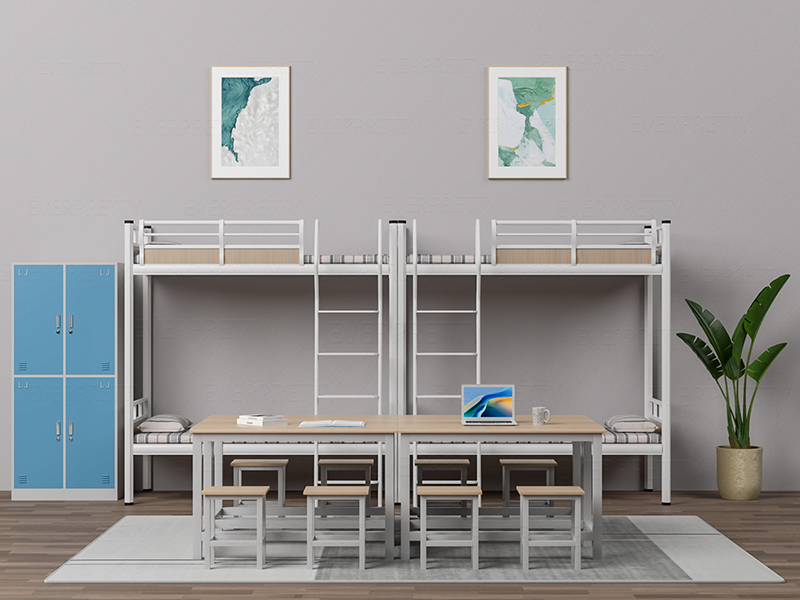
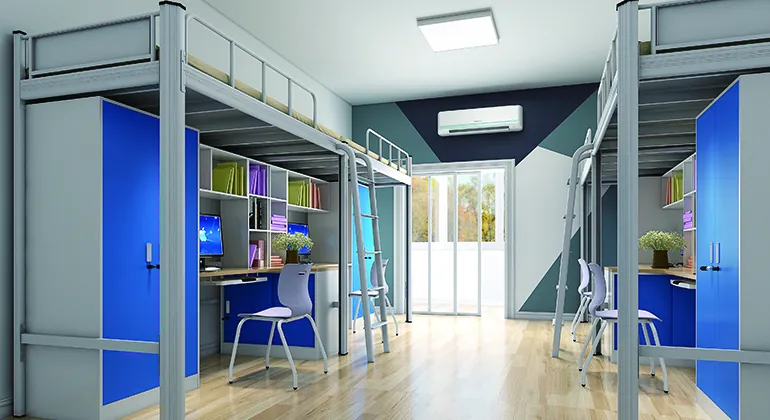
The Middle East and Gulf region represents one of the highest-value dormitory and student accommodation markets in the world. From Saudi Arabia’s Vision 2030 university campus expansion program to the UAE’s ongoing international school and university growth, Qatar’s post-World Cup legacy projects, and Kuwait and Oman’s government education investment — the region combines large project scale with high quality expectations and the procurement budget to match.
For Chinese furniture manufacturers and procurement teams considering or currently serving the Middle East market, this guide explains what sets B2B buyers in this region apart, what they specifically look for in a supplier, and how to position your supply capabilities for success in this high-value market.
Table of Contents
ToggleThe Middle East B2B Buyer: Key Characteristics
Middle Eastern institutional buyers — government procurement bodies, hotel group FF&E teams, engineering contractors, and private university operators — are among the most specification-driven buyers in the world. They differ from Southeast Asian and African buyers in several important ways:
| Characteristic | Middle East / Gulf Buyer | Southeast Asia Buyer | Africa Buyer |
| Primary decision driver | Quality, certification, supplier credibility | Cost + logistics capability | Price + trust verification |
| Typical project size | 1,000–10,000+ beds | 100–2,000 beds | 200–3,000 beds |
| Decision timeline | 6–18 months (government); 3–9 months (private) | 3–8 months | 3–12 months |
| Certification requirement | Mandatory: ISO, BV or SGS, fire retardant | Preferred: ISO, SGS | Preferred: ISO, BV |
| Communication language | English (professionals); Arabic (government) | English | English (East/South Africa); French (West Africa) |
| DDP expectation | Standard for most projects | Increasingly expected | Strongly preferred |
| Premium tolerance | High — quality is worth paying for | Medium — balances cost and quality | Low — price-sensitive |
What Middle Eastern Buyers Are Searching For
B2B procurement teams and engineering contractors in the Gulf search differently from buyers in other regions. Their search vocabulary reflects project-oriented procurement rather than product-oriented browsing:
Project specification searches
- “dormitory furniture supplier Dubai” / “student housing furniture UAE”
- “FF&E supplier Middle East contract furniture”
- “turnkey furniture solution student accommodation Gulf”
- “dormitory furniture manufacturer Saudi Arabia project”
Qualification and compliance searches
- “furniture supplier approved BV certified Middle East”
- “fire retardant furniture certificate dormitory UAE”
- “furniture factory ISO 9001 SGS export Middle East”
- “contract furniture supplier 5 year warranty Gulf”
Logistics and delivery searches
- “furniture DDP delivery Dubai Jebel Ali”
- “furniture shipping China to Saudi Arabia lead time”
- “furniture contractor project management installation Gulf”
The pattern is clear: Middle Eastern buyers are searching for suppliers with project management capability, not just product suppliers. The ability to manage the complete supply chain — from specification to installed furniture — is a core differentiator in this market.
Certification Requirements: Non-Negotiable in the Gulf
The Middle East and Gulf region has the most stringent certification requirements of any emerging market for institutional furniture. Three categories of certification are typically mandatory:
1. Quality Management Certification
ISO 9001 is the baseline requirement. Most government tenders and major private projects in the UAE, Saudi Arabia, and Qatar require suppliers to hold a current ISO 9001 certificate as a condition of bid qualification. A supplier without ISO 9001 will typically be disqualified at the first evaluation stage.
2. Third-Party Product Testing
Bureau Veritas (BV) and SGS are the two most commonly accepted third-party inspection bodies in the Gulf. Buyers specifically request:
- BV or SGS factory audit reports (not more than 2 years old)
- Product test reports for structural furniture — particularly bunk beds and loft beds — confirming compliance with relevant load and stability standards
- Formaldehyde emission test certificates (E1 minimum; E0 preferred for enclosed student rooms)
3. Fire Retardant Certification
This is perhaps the most regionally specific requirement and the one that most catches first-time Middle East suppliers off guard. UAE Civil Defence, Saudi SASO, and Qatar’s QCDD (Civil Defence) all require that upholstered furniture in dormitories, student housing, and institutional accommodation meets fire retardant standards. The most commonly required tests:
- BS 5852 (UK standard — widely referenced in Gulf building codes)
- NFPA 260 (US standard — referenced in some UAE and Qatar projects)
- EN 1021 (European standard — increasingly requested in premium projects)
Non-upholstered furniture (beds, desks, wardrobes) does not typically require fire retardant certification, but upholstered seating — sofas, lounge chairs, mattresses — does for most Gulf institutional projects.
Understanding FF&E in Middle Eastern Projects
Large dormitory and student housing projects in the Middle East are often procured under a FF&E (Furniture, Fixtures and Equipment) package — a comprehensive procurement that covers all movable furnishings in the building, typically managed by a specialist FF&E procurement consultant or directly by the main contractor.
For furniture suppliers, the FF&E context means:
- Quotes are based on a detailed BOQ (Bill of Quantities) prepared by the FF&E consultant — your pricing must match the BOQ format exactly
- Product specifications are detailed and fixed in the tender documents — substitutions require formal approval from the consultant
- Delivery schedules are tied to the construction programme — furniture delivery must be coordinated with building handover dates
- Post-installation punch list and snagging processes are standard — budget for replacement of any items that do not pass the consultant’s final inspection
If you are supplying through a main contractor rather than directly to the end client, confirm at the outset whether they have an FF&E consultant involved and whether their BOQ specifications will apply to your scope.
Shipping to the Gulf: Ports, Lead Times, and Logistics
| Country | Main Port | Transit Time from Guangzhou | Approx. 20ft FCL Cost | Key Customs Note |
| UAE | Jebel Ali (Dubai) | 18–25 days | USD $2,000–$3,500 | 5% VAT on import; no duty on furniture for most categories |
| Saudi Arabia | Jeddah Islamic Port / King Abdul Aziz, Dammam | 20–28 days | USD $2,200–$4,000 | 15% VAT; SASO product certification may be required |
| Qatar | Hamad Port (Doha) | 20–26 days | USD $2,200–$3,800 | 5% VAT; strict documentation requirements |
| Kuwait | Shuwaikh / Shuaiba Port | 22–30 days | USD $2,400–$4,200 | 5% VAT; customs inspection more frequent than UAE |
| Oman | Port Sultan Qaboos / Sohar | 18–24 days | USD $2,000–$3,500 | 5% VAT; relatively straightforward customs process |
All Gulf Cooperation Council (GCC) countries have a 5% unified VAT on imports, with the exception of Saudi Arabia at 15%. No import duty on most furniture categories under GCC Common External Tariff (furniture: 5% for some categories, 0% for others — confirm with customs broker).
Jebel Ali in Dubai is the dominant regional hub. Many buyers in Saudi Arabia, Qatar, Kuwait, and Oman choose to route shipments through Dubai for transshipment — adding 3–7 days to transit time but benefiting from the UAE’s highly efficient port and logistics infrastructure.
Staff Accommodation: The Hidden Large Market
Beyond university dormitories, the Middle East has a substantial demand for staff and worker accommodation furniture that is frequently overlooked by suppliers focused on the student housing segment. The scale is significant:
- Saudi Arabia’s Vision 2030 mega-projects (NEOM, Red Sea Project, Qiddiya) require accommodation for hundreds of thousands of construction workers and permanent staff
- UAE’s ongoing construction and hospitality sector expansion requires large volumes of staff accommodation furniture annually
- Qatar’s post-World Cup legacy infrastructure projects continue to require worker and staff housing at scale
Staff accommodation furniture requirements differ from student housing in several ways: higher durability standards (24/7 use, multiple shift rotations), more emphasis on steel construction (easier cleaning and maintenance), and larger order volumes per project. This segment is less visible in online procurement but accessed through engineering contractors and government-linked project management companies.
| Topohut: Certified and Ready for Middle East Projects Topohut — China furniture manufacturer holds ISO 9001, SGS, TUV, and Bureau Veritas certifications required by Gulf procurement standards. We have supplied dormitory, student residence, and staff accommodation projects in the UAE, Saudi Arabia, Qatar, and Kuwait — with full DDP delivery to Jebel Ali, Jeddah, Hamad Port, and all major Gulf ports.
For tender enquiries, BOQ pricing, and FF&E project support: view our certifications or contact our project team at topohut.com/contact-us. |
Frequently Asked Questions
Do I need SASO certification to export furniture to Saudi Arabia?
SASO (Saudi Standards, Metrology and Quality Organization) product certification requirements for furniture are evolving. Currently, SASO product registration is mandatory for some product categories. Check with your Saudi customs broker or the SASO portal for the current status of your specific product types before shipping. Failure to comply can result in goods being held at the port.
Is Bureau Veritas (BV) required or just preferred in Gulf projects?
BV certification is required (not just preferred) on many government-funded projects in the UAE, Saudi Arabia, and Qatar. It is typically specified in the tender documentation as a mandatory supplier qualification criterion. For privately funded projects without a formal tender process, BV is strongly preferred and significantly increases buyer confidence. If you have ISO 9001 and SGS but not BV, proactively obtain a BV factory audit report before approaching Gulf project buyers.
What is the typical payment term for Middle East dormitory furniture projects?
Large Middle East projects often use Letter of Credit (LC) payment terms, particularly for government-funded tenders. LC terms provide protection for both parties — the supplier is guaranteed payment once documents are presented; the buyer is assured goods are shipped before payment is released. For smaller or private-sector orders, T/T (bank transfer) with 30% deposit and 70% against BL copy is more common.