Planning a dormitory fit-out is a logistical exercise with dozens of moving parts. One missed item in your furniture specification can mean a delayed opening, additional procurement orders, or complaints from students on day one.
This checklist covers every furniture item typically required for a university dormitory, school boarding facility, student hostel, or staff accommodation project. It is organized by space type, includes specification notes for each item, and ends with a quantity planning tool you can use immediately.
Use this checklist when writing your Request for Quotation (RFQ), briefing your interior designer, or verifying your supplier’s product list before production begins.
| How to Use This Checklist 1. Print or copy the relevant sections for your room types. 2. Tick each item as you confirm it in your specification document. 3. Complete the Notes column with your size, colour, material, and quantity requirements. 4. Share with your supplier as part of your RFQ to ensure nothing is missed.
Tip: Share this page with your project manager or procurement officer — it is designed to work as a live working document. |
Table of Contents
ToggleChecklist 1: Single-Occupancy Student Room
The standard configuration for most university dormitories and student residences. Each room is occupied by one student and requires a complete set of sleeping, studying, and storage furniture.
| ✓ | Sleeping Area | Specification / Notes |
| □ | Single bed frame | Single: 90×190cm or 100×200cm. Steel or MFC. Confirm ceiling height for loft options. |
| □ | Mattress | 8–12cm foam or pocket spring. Fire retardant cover recommended. Waterproof protector optional. |
| □ | Bed slats / base support | Included with bed frame or separate. Min. 14 slats for even support. |
| □ | Underbed storage drawer | Optional but popular. Confirm clearance under bed frame (min. 20cm). |
| □ | Pillow | Not always included in furniture scope — confirm with client brief. |
| ✓ | Study Area | Specification / Notes |
| □ | Study desk | Minimum 100×50cm surface. Cable management hole recommended. Confirm knee clearance height (min. 70cm). |
| □ | Study chair | Height-adjustable preferred. Mesh back for tropical climate. Confirm weight rating (min. 100kg). |
| □ | Desk lamp mounting / power outlet | Some desks include integrated USB/power. Confirm electrical spec with project. |
| □ | Bookshelf / wall shelf | Optional. Wall-mounted saves floor space. Confirm wall type (drywall vs. concrete). |
| □ | Notice board / whiteboard | Optional. Often requested by universities. Confirm size and mounting method. |
| ✓ | Storage & Wardrobe | Specification / Notes |
| □ | Wardrobe | Min. 2-door. 80–100cm wide per student. Hanging rail + shelf minimum. Mirror door optional. |
| □ | Chest of drawers | 3–4 drawers. MFC construction. Soft-close runners recommended for durability. |
| □ | Nightstand / bedside table | 1 drawer minimum. Width: 40–50cm. Height: matches mattress top. |
| □ | Luggage rack / suitcase space | Often overlooked. Under-bed or dedicated shelf. Min. 70cm width. |
| □ | Coat hooks / wall hooks | 2–4 hooks behind door or on wall. Chrome or matte finish to match room scheme. |
For the full range of bedroom and storage solutions, see our complete bedroom furniture range.
Checklist 2: Double or Shared Occupancy Room
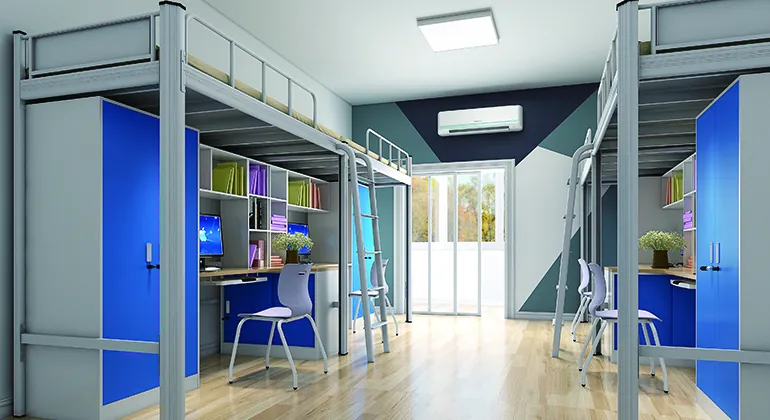
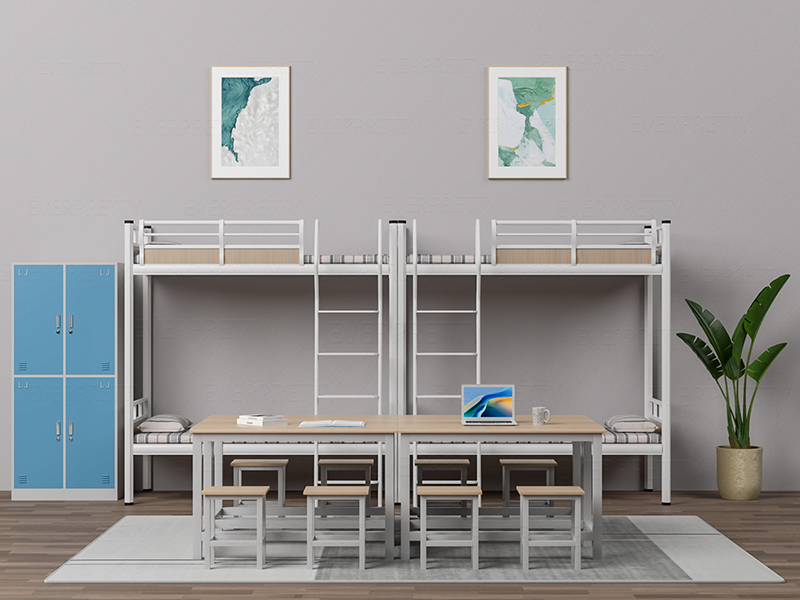
Double rooms require careful space planning to ensure both students have equal access to sleeping, studying, and storage areas without the room feeling crowded. Bunk beds are the most space-efficient solution for double and triple rooms.
| ✓ | Sleeping Area (Double Room) | Specification / Notes |
| □ | Bunk bed frame (2-tier) | Steel construction preferred. Safety rail on upper bunk (min. 16cm height). Access ladder or staircase. |
| □ | 2× Mattresses | Same spec as single room. Upper bunk: lighter foam recommended. |
| □ | Individual reading light per bunk | Clip-on or integrated LED strip. Reduces shared light conflicts. |
| □ | Upper bunk privacy curtain rail | Optional but increasing in demand for premium student housing. |
| □ | Underbed storage (lower bunk) | Pull-out drawer or open shelf. Confirm clearance. |
| ✓ | Study Area (per student) | Specification / Notes |
| □ | Study desk × 2 | Each student needs a dedicated desk. L-shaped or side-by-side configuration depending on room layout. |
| □ | Study chair × 2 | Height-adjustable. Stackable chairs save space when room is used for other purposes. |
| □ | Individual desk organizer / shelf | Small shelf above desk surface. Helps separate each student’s space. |
| ✓ | Storage (per student) | Specification / Notes |
| □ | Wardrobe × 2 (or 1 double-width unit) | Each student requires a minimum of 60–80cm wardrobe hanging space. |
| □ | Bedside table × 2 | One per student. Upper bunk student may use a wall shelf instead. |
| □ | Locker / lockable storage | Strongly recommended. Reduces theft complaints significantly. |
| □ | Shared coat hooks | 4–6 hooks near door. Each student should have at least 2. |
For study desks & chairs for students, we manufacture in bulk for university and dormitory projects across Southeast Asia.
Checklist 3: Common Areas and Shared Spaces
Common areas define the social quality of a dormitory. Well-furnished common areas improve student satisfaction scores, reduce vacancy rates, and are frequently cited in university accommodation reviews. Do not underbudget this section.
Study Lounge / Reading Room
| ✓ | Study Lounge | Specification / Notes |
| □ | Study tables (6–8 seater) | Rectangular or modular. 160×80cm per unit minimum. Laminate surface. |
| □ | Study chairs (stackable) | Upholstered or mesh. Stackable to allow flexible use of space. |
| □ | Individual carrel desks | For quiet zones. Provides visual privacy between students. |
| □ | Bookshelves / display shelving | Floor-to-ceiling units for reference materials or decor. |
| □ | Soft seating / lounge chairs | 2–4 units per lounge. Complements hard study seating. |
| □ | Coffee table | 1–2 per soft seating cluster. Specify height relative to sofa seat height. |
| □ | Charging station / power hub | Increasingly expected by students. Confirm electrical load with project engineer. |
Common Lounge / Social Area
| ✓ | Social Lounge | Specification / Notes |
| □ | 3-seat sofa | Fabric or faux leather. Consider cleanability in high-traffic environment. |
| □ | 2-seat sofa / loveseat | 1 per seating cluster. Modular sofas allow flexible configuration. |
| □ | Armchairs | 2–4 per lounge. Mix with sofa for varied seating options. |
| □ | Coffee table / side tables | 1 per seating cluster. Durable laminate or solid wood top. |
| □ | TV cabinet / media unit | If TV is provided. Enclosed storage reduces cable clutter. |
| □ | Bean bags / floor cushions | Optional. Popular in youth accommodation. Easy to move and store. |
| □ | Notice board / bulletin board | For event announcements and community info. Wall-mounted. |
Dining Area
| ✓ | Dining Area | Specification / Notes |
| □ | Dining table (4–6 seater) | Compact: 120×80cm (4 pax). Standard: 160×80cm (6 pax). Wipe-clean surface. |
| □ | Dining chairs | 4–6 per table. Stackable preferred. Easy to clean upholstery or hard seat. |
| □ | Counter / bar stools | If kitchen counter seating is provided. Seat height: 65–75cm for standard counter. |
| □ | Serving / buffet sideboard | Optional. Useful for communal dining halls or self-catering kitchens. |
| □ | Trash / recycling station | Not furniture, but often part of FF&E specification. Confirm with client. |
Corridor / Reception / Lobby
| ✓ | Entry & Circulation Spaces | Specification / Notes |
| □ | Reception desk | If staffed. Width: min. 120cm. Counter height: 105–110cm. Storage drawers below. |
| □ | Waiting chairs / bench seating | 2–6 seats near entrance. Wipe-clean upholstery. |
| □ | Shoe racks / storage benches | Near entrance of shared rooms or corridors. 4–6 pairs per unit. |
| □ | Corridor lockers | Full-height or half-height. Steel construction. Master key + individual key system. |
| □ | Umbrella stand | Near main entrance. Reduces floor slip hazard. |
| □ | Outdoor / balcony seating | If outdoor space is included. Weather-resistant materials only. |
Checklist 4: Staff Accommodation and Premium Student Housing
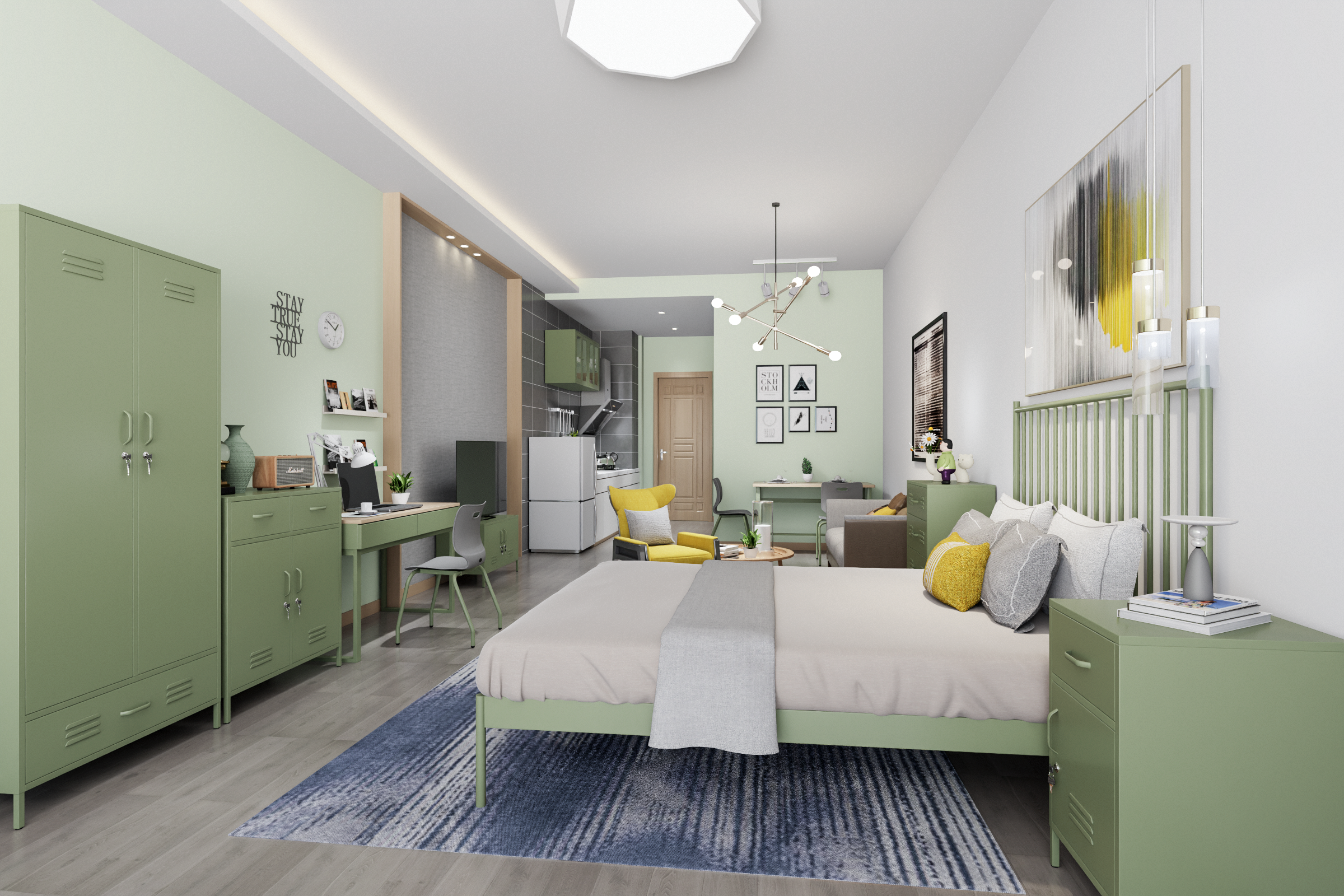
Staff quarters and premium student residences demand a higher standard of furniture — typically mid-to-premium tier materials, more complete room configurations, and additional amenity items.
| ✓ | Premium / Staff Room Additions | Specification / Notes |
| □ | Upholstered headboard | Adds softness and visual warmth. Fabric or faux leather. Wall-mounted or bed-integrated. |
| □ | Full-length mirror | Freestanding or wall-mounted. Min. 40×150cm. |
| □ | Dressing table / vanity | With mirror and small drawers. Often requested for staff quarters. |
| □ | Armchair or reading chair | Small tub chair or accent chair. Adds residential feel. |
| □ | Coffee table (room-sized) | 60×60cm. Pairs with chair for in-room relaxation area. |
| □ | Blackout curtain track / blind | Often part of FF&E spec. Confirm if included in furniture scope. |
| □ | Welcome mat / bedside rug | Not strictly furniture but often in FF&E scope. Confirm with project. |
| □ | Mini fridge cabinet / unit | If mini fridge is provided. Cabinet hides appliance and adds surface. |
| □ | Safe box housing / shelf | For in-room safes. Confirm dimensions with safe supplier. |
Quantity Planning Tool: How Many Units Do You Need?
Use the table below to calculate total quantities across your project. Fill in your room count per type to get total unit requirements.
| Item | Single Room ×__ | Double Room ×__ | Triple Room ×__ | Total Units | |
| Single bed frame | 1 per room | — | — | ||
| Bunk bed frame (2-tier) | — | 1 per room | — | ||
| Triple bunk bed | — | — | 1 per room | ||
| Mattress | 1 per room | 2 per room | 3 per room | ||
| Study desk | 1 per room | 2 per room | 3 per room | ||
| Study chair | 1 per room | 2 per room | 3 per room | ||
| Wardrobe | 1 per room | 2 per room | 3 per room | ||
| Nightstand | 1 per room | 2 per room | 3 per room | ||
| Chest of drawers | 1 per room | 1 per room | 1 per room | ||
| Underbed storage | 1 per room | 1 per room | — | ||
| Coat hooks (set) | 1 per room | 1 per room | 1 per room | ||
| How to use this table: Fill in your room counts in the column headers (e.g. Single Room ×150). Multiply each row by the quantity per room and your room count. Sum each row to get total units to include in your RFQ. | |||||
What to Confirm with Your Supplier for Each Item
Once you have completed your checklist, share it with your supplier and confirm the following for every product category:
| For bed frames: • Exact dimensions (length × width × height including headboard) • Maximum load capacity (upper bunk min. 120kg, lower bunk min. 150kg) • Safety rail height on upper bunk (min. 16cm above mattress surface) • Ladder style: vertical (saves space) vs. angled (easier to climb) • Surface finish: powder-coated steel, wood veneer, or melamine
For study desks: • Desktop material and thickness (min. 18mm MFC for durability) • Knee clearance height (min. 70cm for seated comfort) • Cable management: grommet hole, under-desk tray, or integrated power strip • Finish edge: ABS edge banding (2mm preferred for durability vs. 0.5mm budget)
For wardrobes: • Internal configuration: hanging rail + shelf vs. full shelf vs. mixed • Door type: hinged (requires clearance) vs. sliding (better for small rooms) • Hinge quality: soft-close hydraulic vs. standard (soft-close adds $3–8 per wardrobe) • Lock: key lock, magnetic catch, or no lock — confirm based on project policy |
5 Things Most Dormitory Projects Forget to Include
- Coat hooks and wall hooks. Students need 2–4 hanging points per person. These cost $5–$15 per set but prevent immediate complaints on move-in day.
- Shoe storage. Especially important in Southeast Asian markets where removing shoes at the door is standard. A basic shoe rack per room costs $15–$30.
- Blackout provisions. Curtain tracks or blind fixings. Often missed in FF&E scope because the project team assumes it is part of the fit-out. Confirm who is responsible.
- Upper bunk individual lighting. Upper bunk students cannot access a standard desk lamp. LED reading strips integrated into the bed frame cost $8–$15 per bunk and prevent this complaint entirely.
- Common area coffee tables. Procurement teams often spec sofas and chairs but forget the tables. A lounge with nowhere to put a cup or laptop feels unfinished.
| Need a Supplier Who Covers Every Item on This List? Topohut dormitory furniture is a China-based factory specializing in complete furniture packages for university dormitories, student hostels, and staff accommodation. We supply every category in this checklist — beds, desks, wardrobes, common area furniture, and more — from a single source, reducing your procurement complexity and logistics cost.
Why single-source with Topohut:
• One quote, one production schedule, one shipment — no coordination between multiple suppliers • Complete bedroom furniture range including storage, study, and sleeping categories • Common area furniture: sofas, dining sets, study lounge furniture • OEM customization: colours, dimensions, branding • Direct export to Vietnam, Philippines, Malaysia, and 30+ countries
Send us your completed checklist or room count, and we will prepare an itemized quote within 48 hours. Contact our project team to get started. |
Frequently Asked Questions
What furniture is standard in a university dormitory room?
A standard single dormitory room typically includes: bed frame, mattress, study desk, study chair, wardrobe, nightstand, and coat hooks. Some universities also include underbed storage and a chest of drawers. Premium rooms add armchairs, full-length mirrors, and dressing tables.
How do I calculate how much dormitory furniture I need for a project?
Use the quantity planning table in this guide. Multiply the quantity per room type by your room count for each type, then sum across room types to get your total units per product. This total goes directly into your RFQ to suppliers.
Should I include common area furniture in the same RFQ as bedroom furniture?
Yes, if possible. Sourcing common area and bedroom furniture from the same supplier simplifies logistics, ensures visual consistency, and often reduces cost through higher overall order volume. Ask your supplier to confirm they can produce both categories.
What is the most commonly forgotten item in dormitory furniture specifications?
Coat hooks, shoe storage, and upper bunk reading lights are the three most frequently missed items. They are low-cost individually but cause disproportionate complaints when absent. Include all three in every room specification as a default.
Conclusion
A complete dormitory furniture specification is the foundation of a successful student housing project. Use this checklist to ensure nothing is missed — from the upper bunk safety rail to the corridor umbrella stand.
The most common cause of procurement delays and on-site complaints is not poor quality — it is missing items that were never specified in the first place. A thorough checklist, shared with your supplier before production begins, prevents almost all of these issues.
If you would like a pre-filled version of this checklist tailored to your specific room types and project scale, contact Topohut dormitory furniture and share your floor plans — our team will prepare a complete specification and product list for your review.