The Challenge
Narayana School is one of India’s most respected educational networks, with campuses spanning multiple states and serving communities with deeply distinct cultural identities. When the group decided to furnish over seven hundred and fifty schools, they brought with them a clear and non-negotiable requirement: no two campuses should feel the same.
A school in coastal Kerala needed materials and colors suited to a humid tropical climate. A campus in the arid plains of Rajasthan demanded dust-resistant finishes and warmer tones. A northeastern school required design references that respected local aesthetic traditions. The directive was 750 schools, 750 distinct identities — every classroom and dormitory designed to feel like home to the students living there.
Most manufacturers wanted to offer a single standardized product line. Others failed to grasp the nuance of regional customization entirely, reducing detailed briefs to generic templates. Narayana’s vision of a warm, welcoming environment for every student seemed impossible to realize at scale.
What We Did
We entered this project with a firm belief that customization was not a burden — it was the point. Drawing on years of experience in the Indian market, we approached Narayana not as a volume supplier, but as a design partner.
Our first step was intensive, immediate communication. We did not ask the client to produce exhaustive specifications — we asked questions. About each region’s climate, each community’s cultural preferences, each school’s architectural style. We clarified every dimension, every material, every functional requirement down to the millimeter. We listened, we documented, and we proved that we had absorbed the full depth of their vision.
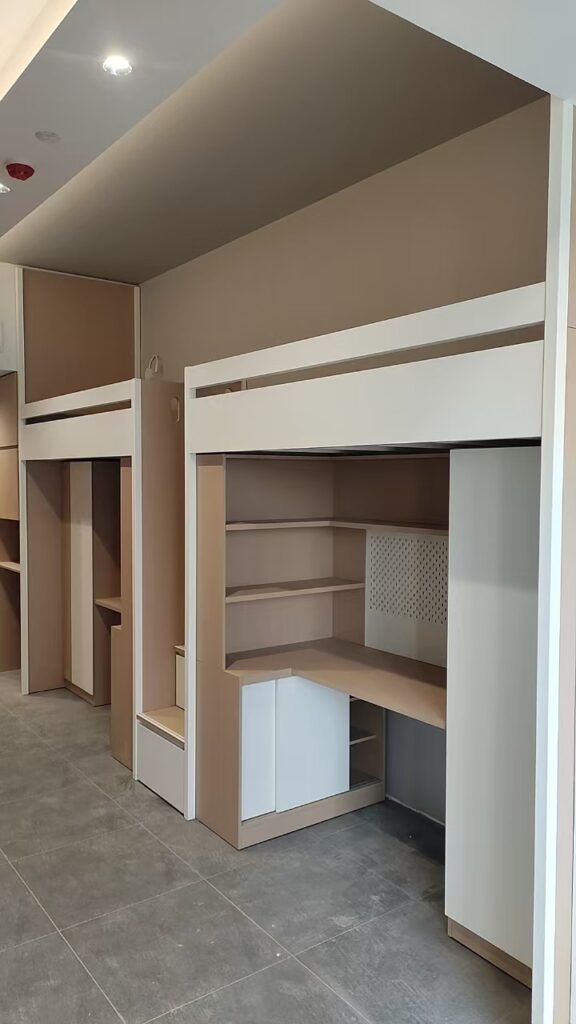
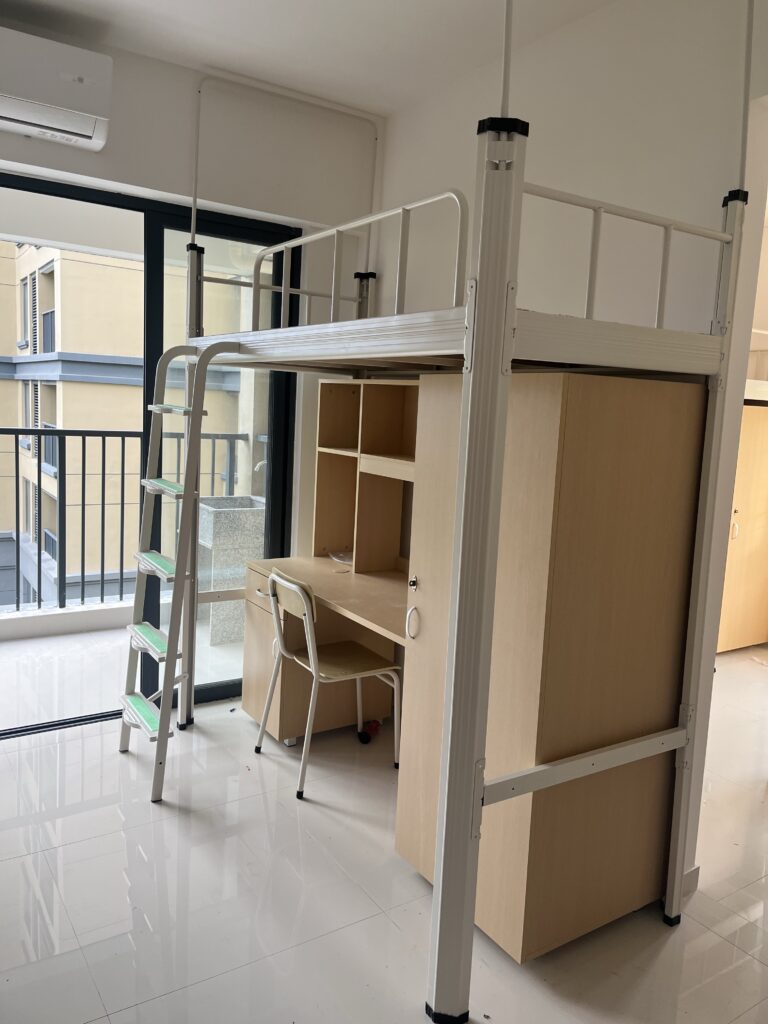
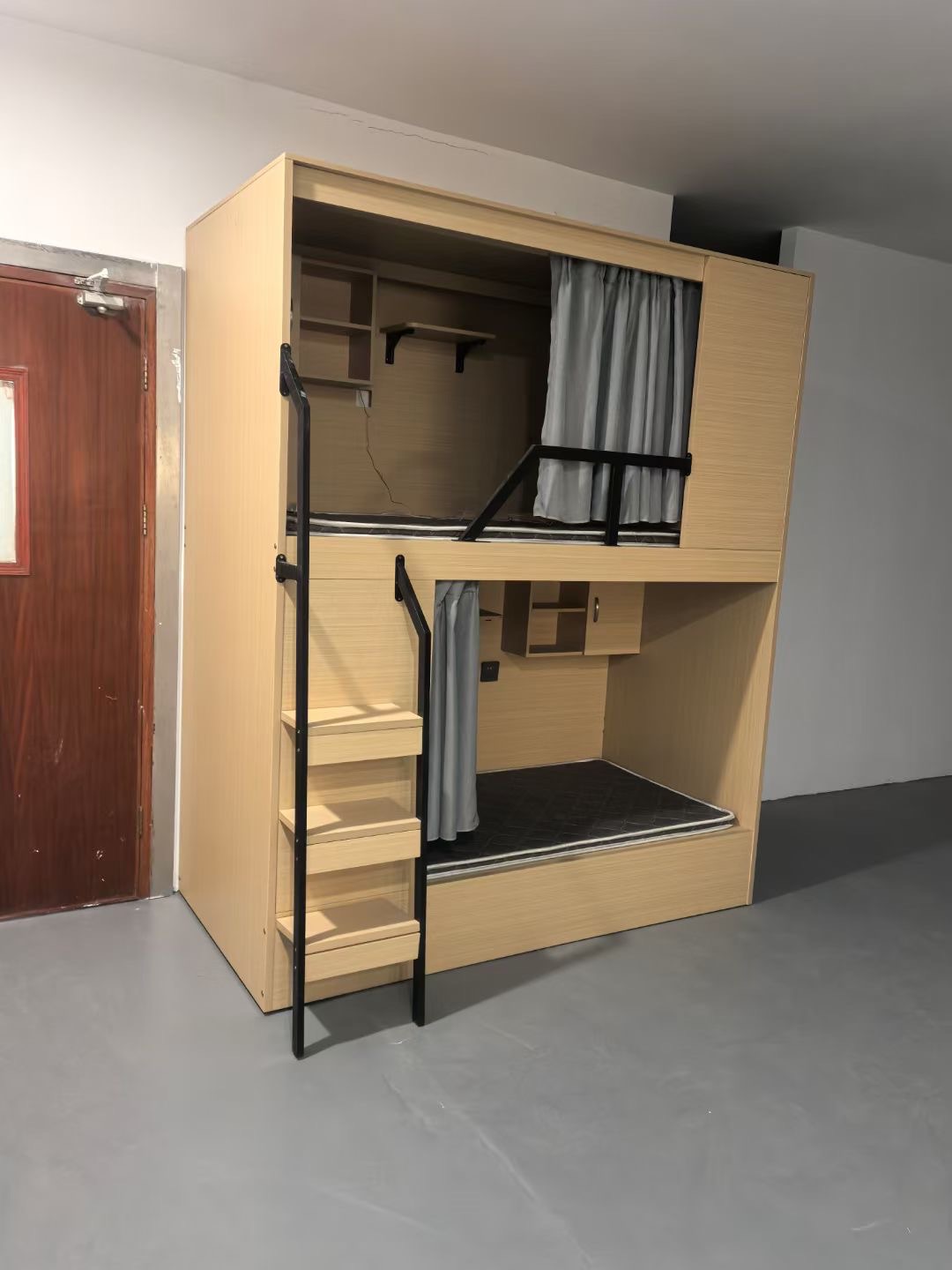
Then came our most significant commitment: free, independent design services for every single school. Our team did not produce one master plan to be replicated 750 times. They produced 750 distinct spatial layouts and product configurations — each tailored to its campus. Coastal schools received moisture-resistant materials and lighter palettes. Schools in arid regions got dust-resistant finishes and warmer tones. Northeastern campuses incorporated regionally resonant design elements. Every space was rendered in detailed 3D visualizations before a single piece was manufactured.
To address concerns about production reliability, we invited the school’s team to conduct round-the-clock virtual factory inspections — live, unedited, at any hour. Government-certified documentation was provided in full: factory ownership deeds, business licenses, export records, and quality certifications. Throughout production, any issue or change received a formal solution within one hour.
The Result
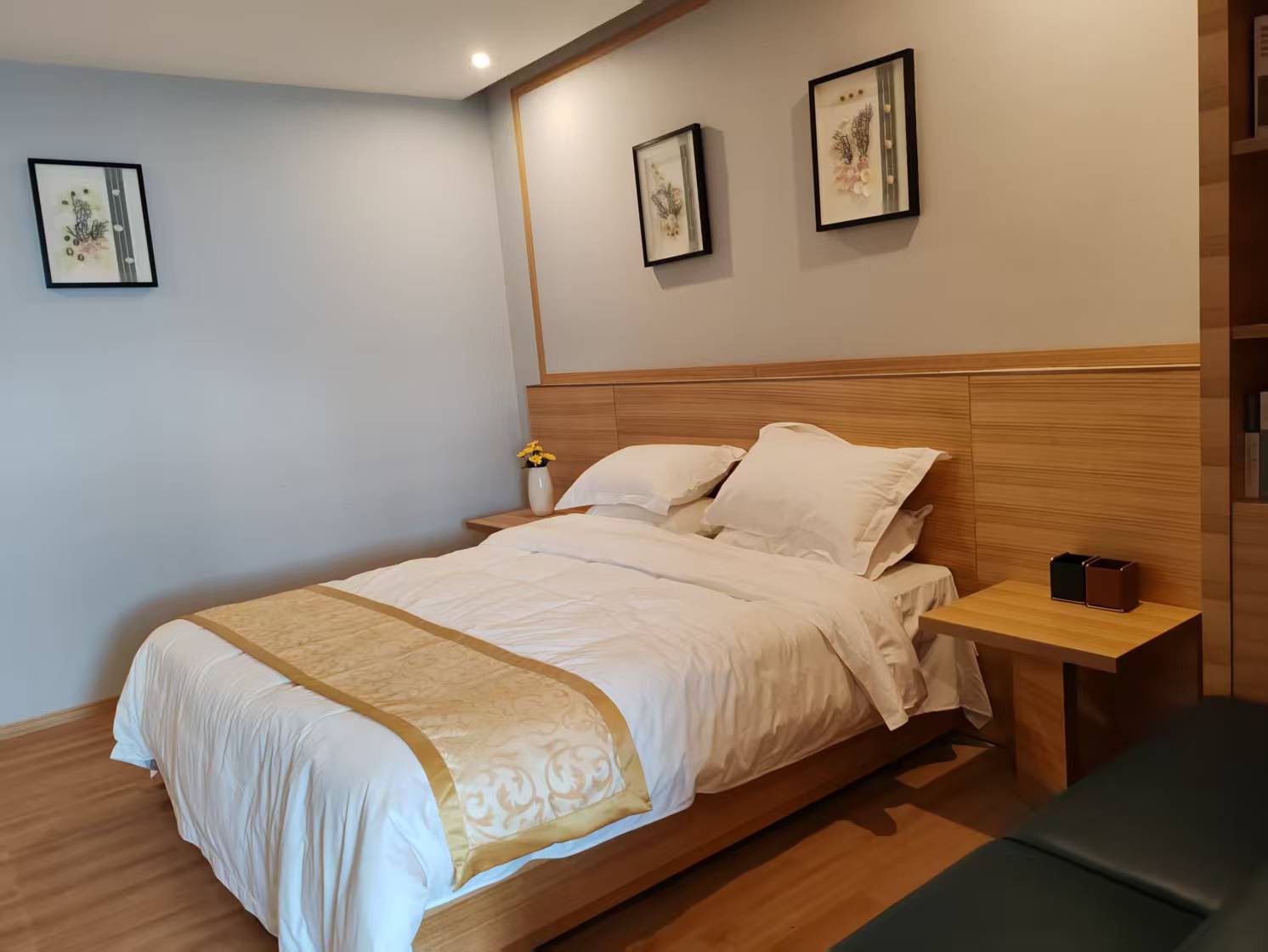
When furniture was installed and the first campuses welcomed students, the response was immediate. Administrators reported that the spaces felt genuinely warm and inviting. Students seemed more at ease — more at home. The furniture did not just function; it contributed to a sense of belonging.
Narayana did not close the project when the final delivery was made. They established a standing annual order, updating furniture in two to five additional schools each year. More importantly, the school became an active advocate within India’s education sector, generating significant introductions to other major institutions across the country.