
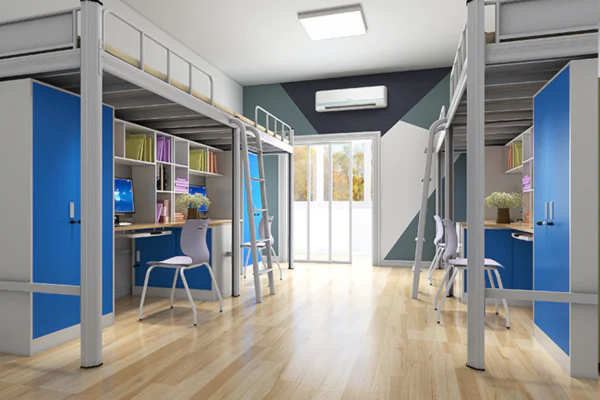
Deciding when to refresh student living quarters is a balancing act between budget constraints and the physical reality of daily wear. On average, most schools look at a major replacement cycle every ten to fifteen years, though this timeframe fluctuates based on material quality and student behavior. If a desk chair starts wobbling after only three semesters, it’s a sign that the initial investment didn’t account for the high-intensity usage typical of a campus environment. We often see that solid wood or heavy-duty laminate pieces outlast cheaper alternatives, saving facilities departments significant money over a decade. Maintaining a fresh look is essential, as outdated or broken residence hall furniture can negatively impact a student’s mental well-being and their overall perception of the university.
Tracking Physical Wear and Tear
Regular inspections are the only way to catch small issues before they become safety hazards or eye-sores. We suggest checking for structural integrity at the end of every academic year, specifically looking for loose joints in bed frames or peeling edges on wardrobes. When these small defects accumulate, the cost of individual repairs often outweighs the price of a full room upgrade. As a one-stop dormitory and apartment furniture solution provider, Topohut Furniture specializes in creating items that withstand the rigorous demands of student life. Our core advantage lies in using reinforced materials that extend the typical replacement window, ensuring that residence hall furniture stays functional and attractive for much longer than the industry average.
Evaluating Aesthetic Relevance
Styles change almost as fast as technology, and a room that looked modern in 2010 might feel like a basement storage unit to a student in 2026. Beyond just being “broken,” furniture needs to be replaced when it no longer meets the functional needs of modern residents, such as lacking integrated power outlets or enough space for larger monitors. We’ve noticed that recruitment often hinges on the quality of the housing tour; if the beds look gray and the desks are chipped, prospective families might question the school’s overall commitment to student care. Investing in modular residence hall furniture allows for easier updates to specific components without needing to scrap the entire inventory, making the refresh process much more manageable.
Budgeting for Long-Term Durability
Financial planning for furniture cycles should start the moment the first truck is unloaded at the loading dock. While the temptation to buy the lowest-priced option is strong, the “cost per year of life” is a much more accurate metric for university boards to consider. High-quality steel frames or solid timber might have a higher upfront cost, but they rarely require replacement before the twelve-year mark. We focus on providing Topohut Furniture solutions that emphasize long-term value and ease of maintenance, offering service features that help housing managers plan their inventories effectively. Our goal is to ensure that every piece of Topohut Furniture contributes to a sustainable, cost-effective housing strategy that doesn’t require constant emergency replacements.
Establishing a Practical Rotation
Creating a staggered replacement schedule is often more effective than trying to refurnish an entire campus in a single summer. By tackling one building or one floor each year, maintenance teams can stay ahead of the curve without exhausting their annual capital. This method also allows the university to test out new layouts or materials on a smaller scale before committing to a campus-wide standard. Keeping your living spaces updated ensures that the environment remains conducive to study and rest, keeping student satisfaction high year after year. Focus on durability and timeless design, and you will find that your replacement cycles become much more predictable and less stressful for your facility staff.