Furniture sourcing is not just about choosing attractive pieces. It directly affects budget, quality, lead time, and end-user satisfaction. Smart furniture sourcing helps buyers avoid delays, poor product quality, and unexpected costs, especially when managing large projects with a strict timeline and budget.
For institutions, hospitality providers, dormitory operators, and developers, the right sourcing strategy can shape the success of the project as a whole.
Tip 1: Know where to source the best furniture
Different countries have built reputations around specific strengths in furniture manufacturing, shaped by local materials, craftsmanship traditions, and industrial infrastructure. Understanding these countries’ advantages is the first step in sourcing furniture that fits your project’s needs.
Comparison of furniture manufacturing strengths by country
| Country | Known for | Comparative Advantage |
| China | Massive production scale; wide style range from traditional rosewood pieces to clean, modern commercial furniture | Deep customization; mature clusters (like Foshan and Dongguan) |
| Japan | Minimalist furniture in wood and bamboo — tatami mats, low tables, sliding doors | Timeless craftsmanship and minimalist aesthetics |
| Indonesia | Rattan, bamboo, and teak products | Strong access to natural materials and growing sustainability initiatives |
| Italy | Luxury leather and marble furniture | Premium craftsmanship and design innovation for high-end projects |
| Germany | Precision-engineered office furniture | Rigorous engineering standards suited to demanding commercial environments |
| Poland | Contemporary furniture | EU-based manufacturing with competitive costs |
| Scandinavia (Denmark&Sweden&Finland) | Minimalist, ergonomic designs in light woods (pine, birch, oak) | Human-centered design with a strong focus on functionality and sustainability |
Each country offers distinct advantages shaped by its manufacturing ecosystem, material availability, and design tradition. Buyers should align these strengths with project requirements, including budget, customization needs, compliance standards, and delivery timelines.
Tip 2: Learn how to find reliable furniture suppliers
Once you know where to look, the next challenge is evaluating trustworthy partners. There are several common sourcing channels, each suited to different project sizes and budgets:
- Manufacturers and factories offer the lowest unit pricing, ideal for large custom or bulk orders, though they typically require a higher minimum order quantity.
- Wholesale platforms and trade marketplaces such as Alibaba and Global Sources connect buyers with thousands of suppliers worldwide, making it easier to compare products, prices, certifications, and production capabilities.
- Trade accounts give professionals wholesale pricing and dedicated sales support.
- Trade shows such as High Point Market or Salone del Mobile allow buyers to inspect quality firsthand and discover new suppliers.
Tips for evaluating reliable furniture suppliers
Evaluating a supplier is just as important as finding one. Before sourcing furniture from a new partner, buyers should complete a structured review.
- Verify the supplier’s legal identity, business history, factory location, export experience, and customer references
- Determine whether the supplier is a manufacturer, trading company, or hybrid, and understand who manages key processes
- Evaluate communication quality, ensuring clear answers, written confirmations, and transparency about uncertainties
- Request and review samples to assess product quality, including dimensions, stability, finish, and packaging
- Consider factory audits or third-party inspections to verify production capacity and quality systems
Using China as an example, buyers may focus on established industrial clusters such as Foshan and Dongguan, where furniture supply chains and export logistics are highly developed. In addition, the Canton Fair provides an excellent opportunity to connect directly with furniture manufacturers.
If quality is a key consideration, buyers can prepare detailed technical specifications in advance and work with third-party inspection agencies to maintain consistent quality throughout large-volume orders. You may also consider visiting factories in person to better assess manufacturing capabilities and quality standards.
Tip 3: Ensure effective cooperation with suppliers
Effective supplier cooperation depends on two key factors: clearly defined furniture requirements and well-established service and contract terms.
Furniture aspect:
1. Confirm materials and product specifications
When sourcing furniture, buyers should provide detailed requirements instead of relying only on product images.
- Specify the wood, metal, fabric, foam, hardware, and finishing materials.
- Confirm dimensions, material thickness, colors, surface treatments, and acceptable tolerances.
- Provide technical drawings, material lists, or reference samples where possible.
- Ask whether alternative materials will affect appearance, durability, price, or lead time.
2. Define quality standards
Both parties should agree on what qualifies as an acceptable finished product.
- Confirm requirements for structural stability, load capacity, workmanship, and finish consistency.
- Define acceptable and unacceptable defects, such as scratches, uneven colors, weak joints, or incorrect dimensions.
- Approve a pre-production sample or golden sample as the reference for mass production.
- Set inspection stages, including material checks, in-process inspections, and pre-shipment inspections.
3. Clarify compliance requirements
Compliance standards may vary by destination market and application.
- Identify relevant requirements for chemical emissions, fire resistance, stability, labeling, and packaging.
- Explain whether the furniture will be used in schools, hotels, offices, dormitories, or residential projects.
- Confirm whether the supplier can provide suitable test reports or supporting documents.
Some furniture certifications are:
- FSC: Sustainably sourced wood
- Fire safety compliance: Required for upholstered and commercial furniture
- ISO 9001/14001: Quality and environmental management
- CE marking: Required for sale or use in the European Economic Area
Service aspect:
1. Clarify OEM and ODM options
Buyers should understand the supplier’s customization capabilities.
- Confirm whether the supplier offers standard products, OEM production, ODM development, or partial customization.
Tips:
- OEM (Original Equipment Manufacturer): You supply the design and specifications; the factory manufactures to your exact requirements.
- ODM (Original Design Manufacturer): The supplier provides a ready-made design that you can adapt and brand as your own.
- Specify permitted changes to dimensions, materials, colors, logos, labels, and packaging.
- Clarify sample fees, development time, minimum order quantities, and customization costs.
2. Review important contract details
The contract should clearly record the responsibilities of both parties.
- Confirm pricing, payment terms, production lead time, and delivery arrangements.
- Define inspection procedures, warranty coverage, and solutions for defective or missing products.
- Record design ownership, confidentiality requirements, and tooling ownership for customized projects.
Written specifications, approved samples, and clear contract terms provide a reliable foundation for long-term supplier cooperation.
Topohut: A Trusted Partner for Furniture Sourcing
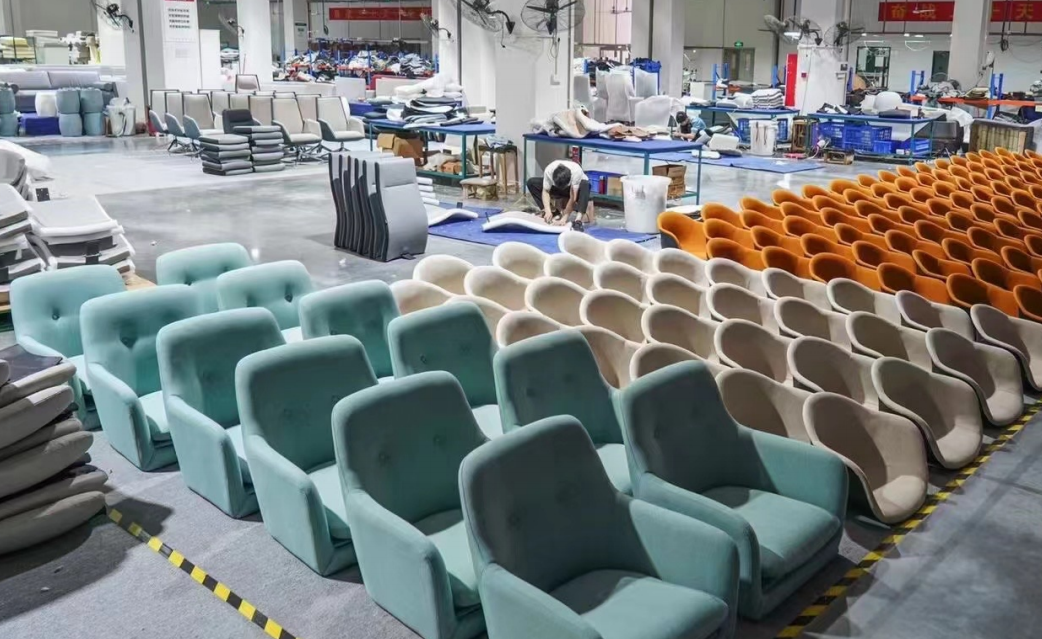
For institutions looking to simplify the furniture supply chain, Topohut is a reliable furniture manufacturer in China. We support schools, dormitories, commercial apartments, government projects, contractors, and distributors with coordinated design, manufacturing, quality control, and delivery services.
Our experience includes several large-scale international projects:
- For the Qatar FIFA 2022 accommodation project, we delivered furniture for 15,000 apartments within two months.
- For a Qatar Gas dormitory project, we completed production in 11 days and delivered furniture for 5,000 rooms within 30 days.
- In India, we supplied customized school and dormitory furniture to more than 750 Narayana campuses.
- We also supported an Iraq Ministry of Education projectcovering more than 1,000 schools. Our services included compliance documentation, school-by-school order sorting, and DDP delivery.
With more than 30 years of manufacturing experience, we have provided production-ready furniture solutions to over 71,520 clients. Our flexible OEM and ODM capabilities allow us to adapt products to different project specifications, budgets, room layouts, and delivery schedules.
Video: Topohut’s furniture manufacturing capabilities
Our main service advantages include:
- Complete one-stop project support: We cover free space planning, customized OEM and ODM manufacturing, quality inspection, global logistics, and on-site installation support.
- Extensive export experience: We export an average of 700 40HQ containers each year to more than 68 countries and regions. Our clients include government agencies, United Nations organizations, major construction contractors, international and private schools, and wholesale distributors.
- International quality recognition: Our quality management and manufacturing processes comply with standards associated with ISO, SGS, TÜV, BV, and CE requirements. Products undergo structured quality inspections before shipment.
- Dedicated project coordination: Each project is assigned a coordinator who follows the schedule from planning through delivery. Our design and sales teams also provide 24/7 communication support.
Buyers who wish to inspect our production facilities can visit our factory in Qingyuan, approximately a 40-minute drive from Guangzhou Baiyun International Airport.
If you are interested, please contact Topohut’s professional team to discuss your furniture sourcing requirements and learn how we can support your next project!