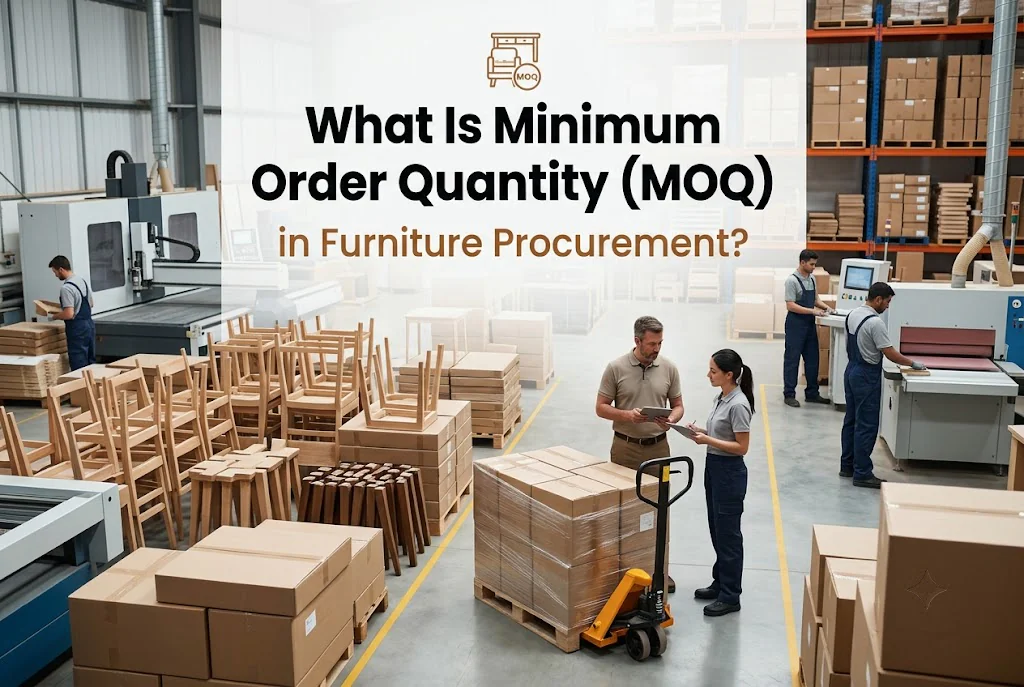
If you’ve ever requested a quote from a furniture supplier and been asked to commit to a bulk order before production, you’ve run into minimum order quantity (MOQ). For buyers wondering what MOQ stands for, it means the lowest number of units a manufacturer is willing to produce or sell in a single order.
Understanding the meaning of minimum order quantity is essential for educational institutions, hotels, dormitory operators, developers, and procurement teams because it affects project budgets, production schedules, shipping efficiency, and the long-term relationship between the buyer and supplier.
Why do furniture manufacturers enforce MOQs?
Furniture manufacturers do not set MOQs to push buyers to place larger orders. A minimum order quantity, or MOQ, is generally linked to the cost and operational requirements of running a production line.
1. Production setup costs
Furniture production involves fixed setup costs—such as programming, calibration, and tooling—that remain similar regardless of order size. Small orders may not cover these costs, especially when customization requires changes in finishes or materials.
2. Material sourcing
Manufacturers rely on suppliers that often have their own minimum purchase requirements. Custom materials, such as fabrics or finishes, may need to be ordered in bulk, making small orders less practical and increasing the risk of unused inventory.
3. Economies of scale
Larger orders spread fixed costs across more units, improving efficiency and lowering per-unit pricing. They also allow better material pricing and more efficient shipping, which is why higher quantities typically result in lower unit costs.
Minimum order quantity meaning (MOQ meaning) in furniture procurement
MOQ is not a single fixed figure. Understanding the meaning of the minimum order quantity in each supplier’s quotation is important.
| Product-Specific MOQ | Order-Level /Financial MOQ | Container-Load MOQ | |
| Definition | Applies to an individual model, SKU, color, size, fabric, or finish | Based on the total number of units or total order value | Linked to shipping container capacity |
| How It Works | Each product variation must meet its own minimum quantity requirement. | Buyers can combine multiple furniture categories to meet a minimum order threshold | Orders are structured to fill a container, often mixing product types |
| Key Influencing Factors | Production batch size, machine setup, material sourcing, finishing changes, packaging, number of variations | Total order value, production efficiency, supplier pricing structure | Shipping volume, packaging dimensions, freight costs, container utilization |
| Best Use Cases | Projects with standardized designs or repeated items | Large-scale projects such as hotels, dormitories and apartments | International procurement |
| Important Considerations | Customizations often increase MOQ; each variation may be treated separately. | Meeting the total MOQ does not eliminate specific requirements for custom items. | LCL shipments may increase costs and handling risks; packing method affects capacity |
1. Product-Specific MOQ
A product-specific MOQ applies to a single model, color, size, or finish and is the most common type in furniture manufacturing. Standard items may have lower minimums, while custom options usually require higher quantities.
2. Order-Level or Financial MOQ
This MOQ is based on total order quantity or value, allowing buyers to combine different furniture types to meet the requirement. It is common in large housing projects such as hotels, dormitories, and residential developments.
3. Container-Load MOQ
Some suppliers link MOQ to shipping volume, especially for exports. This MOQ helps reduce per-unit freight costs and improve efficiency. Buyers may mix different furniture items in one container, but space must be used effectively.
Pros and cons of high MOQs for buyers
A high MOQ can improve cost efficiency but may also create financial and operational pressure. Buyers should evaluate total project requirements rather than focusing only on the lowest quoted unit price.
The Benefits:
- Lower per-unit cost: Bulk material purchasing and full-container shipping both reduce landed cost per piece, and fixed costs like tooling and design fees get spread across more units.
- Better opportunities for custom finishes or branding: Factories are far more willing to accommodate private-label packaging, custom colors, or branded hardware once an order reaches sufficient scale.
- Greater consistency in material batches: Ordering in a single production batch means matching wood grain, fabric dye lots, and paint tone stay consistent — fewermismatched pieces from a later top-up order.
The Challenges:
- Higher upfront capital: Large orders mean paying for goods, freight, duties, and insurance before a single unit generates revenue — a real strain on cash flow for smaller developers.
- Warehousing headaches: Furniture pieces can be Meeting a high MOQ often means renting extra storage space and absorbing added insurance and labor costs.
- Dead stock risk: If a project scope shrinks or design plans change, surplus inventory can become unsellable dead stock.
How to negotiate a good order quantity
MOQ negotiation is more effective when the buyer understands the supplier’s production constraints. Rather than requesting a lower quantity without explanation, buyers can present alternatives that protect the manufacturer’s margins.
1. Leverage your future procurement plan
Share a realistic 12-month sourcing roadmap, or propose a blanket annual agreement with quantities released in phases. Suppliers are often willing to lower first-order thresholds in exchange for a credible long-term commitment.
2. Ask for “stock” or standard items
Factories with ready-to-ship or frequently produced styles often set much lower MOQs — sometimes just a handful of units — because there’s no new tooling or material sourcing involved.
3. Offer to cover a sample or small-run surcharge
If your order falls below the factory’s break-even point, offering to pay a modest premium or covering tooling costs upfront can unlock flexibility that a lower price point wouldn’t.
4. Consolidate orders
Combine multiple SKUs to meet an order-level MOQ, or fill a shared container with furniture from different categories. Pooling orders with other buyers at trade events is another common way to reach a factory’s production threshold together.
How Topohut Helps Buyers Manage Furniture MOQ
Founded in 1994, Topohut has spent over 30 years manufacturing dormitory and commercial furniture — and we’ve structured our MOQ policy around how real projects actually work.
Our standard MOQ starts at 100 units, making it accessible for mid-size institutional projects without sacrificing material batch consistency. With over 79,100 square meters of production facilities, Topohut offers integrated in-house OEM and ODM capabilities, covering product design, engineering, sampling, manufacturing, packaging, and delivery.
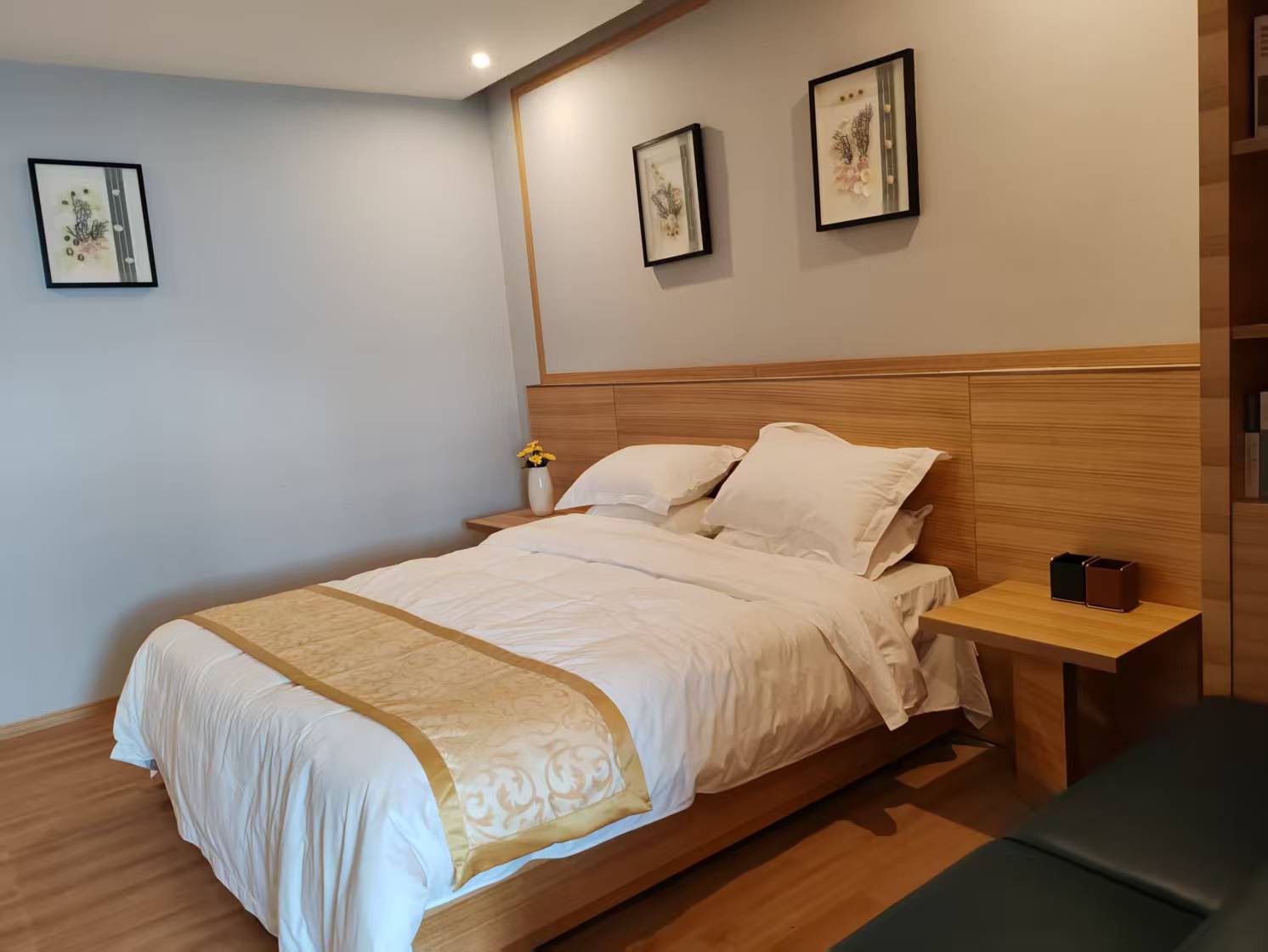
Backed by more than 20 years of import and export experience, Topohut solutions have been supplied to over 68 countries. We have successfully served more than 71,520 customers, including government agencies, United Nations organizations, construction contractors, international and private schools, property developers, wholesalers, and distributors.
Key project references include:
- Tianjin University, China: Delivered furniture for 1,000 apartment rooms within 45 days, including beds, bedside tables, and wardrobes, with full design support and on-site installation.
- Narayana Group of Schools, India: Supplied school and dormitory furniture for more than 750 campuses, with customized campus layouts and DDP delivery.
- Qatar FIFA World Cup 2022 Project: Delivered furniture, lounge seating, and bedding for up to 15,000 rooms within two months, including tender support, design services, and DDP delivery.
- Mexico Apartment Project: Completed furniture delivery for 500 apartments within 30 days, with full design, DDP shipping, and on-site installation.
If you’re scoping a dormitory, staff housing, or hospitality project, contact our team for a tailored quote and free 3D space plan.