
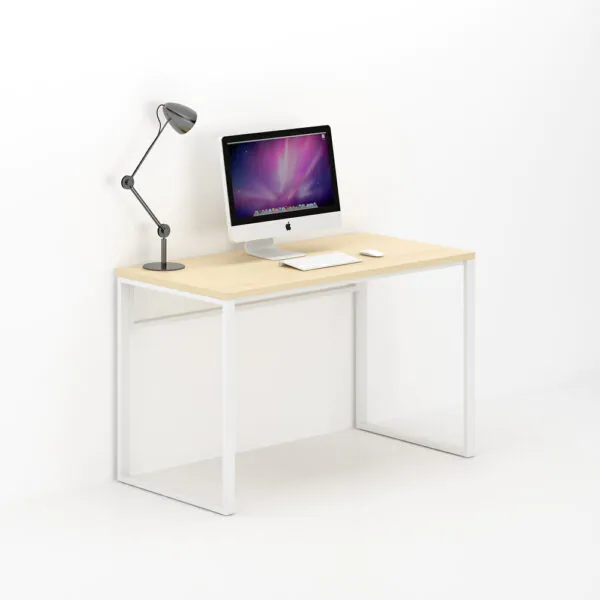
Providing a safe and healthy environment for students involves more than just picking a sturdy chair or a large table. We often receive questions about the chemical safety of the materials used in student housing, specifically regarding formaldehyde emission ratings. These ratings—E0, E1, and E2—measure how much gas is released from the resins used to bond wood fibers in products like a dormitory desk. Because students spend a significant amount of time studying and sleeping in relatively small, enclosed spaces, the air quality inside their rooms is a vital consideration. By looking at these specific laboratory standards, we can ensure that the air remains fresh and free from irritating odors that can impact concentration and long-term health.
Breaking Down the E0, E1, and E2 Standards
Labels like E0, E1, and E2 tell us exactly how much formaldehyde gas a board releases into the surrounding air. An E2 rating allows for higher emissions, often up to 5.0 mg/L, which makes it unsuitable for long-term indoor use in modern housing projects. On the other hand, an E1 rating is the most common residential standard, limiting emissions to 1.5 mg/L, which many building codes accept for general interior decoration. Because Topohut Furniture operates as a one-stop dormitory and apartment furniture solution provider, we focus on sourcing materials that meet the strictest safety benchmarks. The E0 rating is the most environmentally friendly, with emissions capped at just 0.5 mg/L, helping to maintain air quality where a dormitory desk dormitory desk gives off almost negligible amounts of gas.
Matching the Rating to Your Specific Room
Deciding which grade to buy depends heavily on the ventilation and the purpose of the space. For open-plan lounges or well-ventilated lobbies, an E1-rated dormitory desk might be perfectly sufficient and more budget-friendly. However, in small, air-conditioned bedrooms where students might spend twelve hours a day, the E0 standard becomes the preferred choice to ensure optimal air quality. We suggest that for sensitive environments like student healthcare centers or high-density dorms, you should strictly prioritize E0 materials. Using a lower-emission dormitory desk reduces the risk of respiratory irritation, which is a common complaint when low-grade engineered wood is installed in sealed rooms.
How to Verify Quality Before You Buy
Buying furniture based on a label alone can be risky, so we always recommend asking for official test reports from the manufacturer. You should check if the boards are fully edge-banded, as sealing the raw edges of a dormitory desk can further reduce the amount of formaldehyde that escapes into the room. We take pride in our transparent supply chain and our core advantage of providing certified, low-emission furniture packages tailored to large-scale school projects. Topohut Furniture ensures that every piece of dormitory desk equipment we provide undergoes rigorous quality control to meet the promised environmental ratings. By verifying these details during the procurement phase, you protect both the health of the residents and the long-term reputation of your housing facility.
Total peace of mind comes from knowing that your furniture choices support a healthy lifestyle for every resident. By prioritizing E0 or E1 ratings, you ensure that your dormitory desk inventory does not compromise indoor air quality with harmful off-gassing. We believe that a high-quality living space starts with the invisible details, like the glue used inside the wood panels. As your partner in furnishing student environments, we are here to help you balance budget constraints with the highest safety standards. Investing in the right formaldehyde rating is a practical step toward creating a productive, irritation-free home for your students.